
Best AI Agents for Sage Intacct
Sage Intacct ships a suite of named finance agents under accountable governance. Here is what they cover, where they stop, and how a cross-module agent layer fits on top.
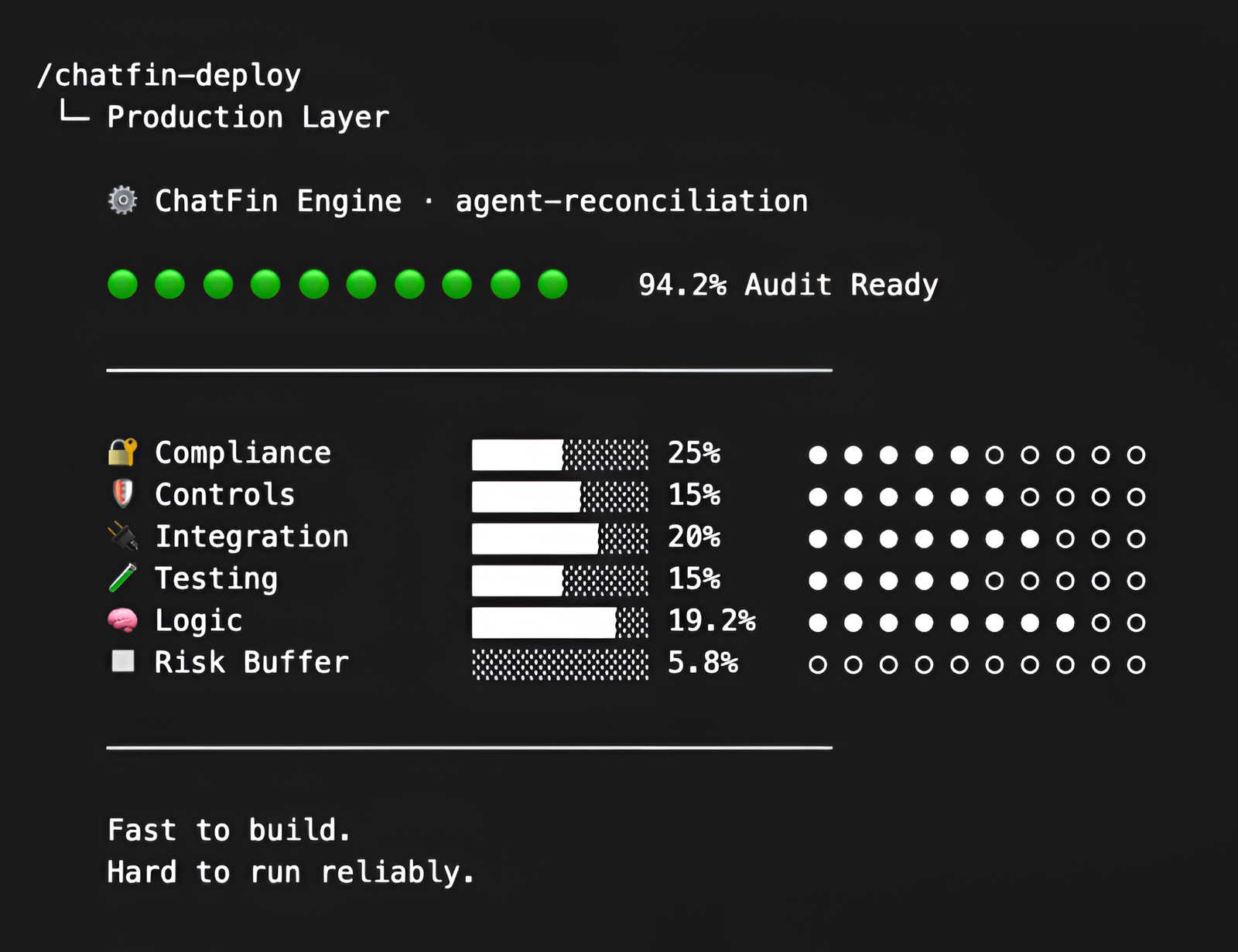
- Sage Intacct 2026 ships five named agents (Close, AP, Time, Assurance, Finance Intelligence) under an accountable-governance model, plus Sage Copilot and a Snowflake zero-ETL Data Cloud. Enable these first.
- The native agents are strong inside Intacct's dimensional model. They do not carry a workflow across bank, subledger, and report as one motion across systems.
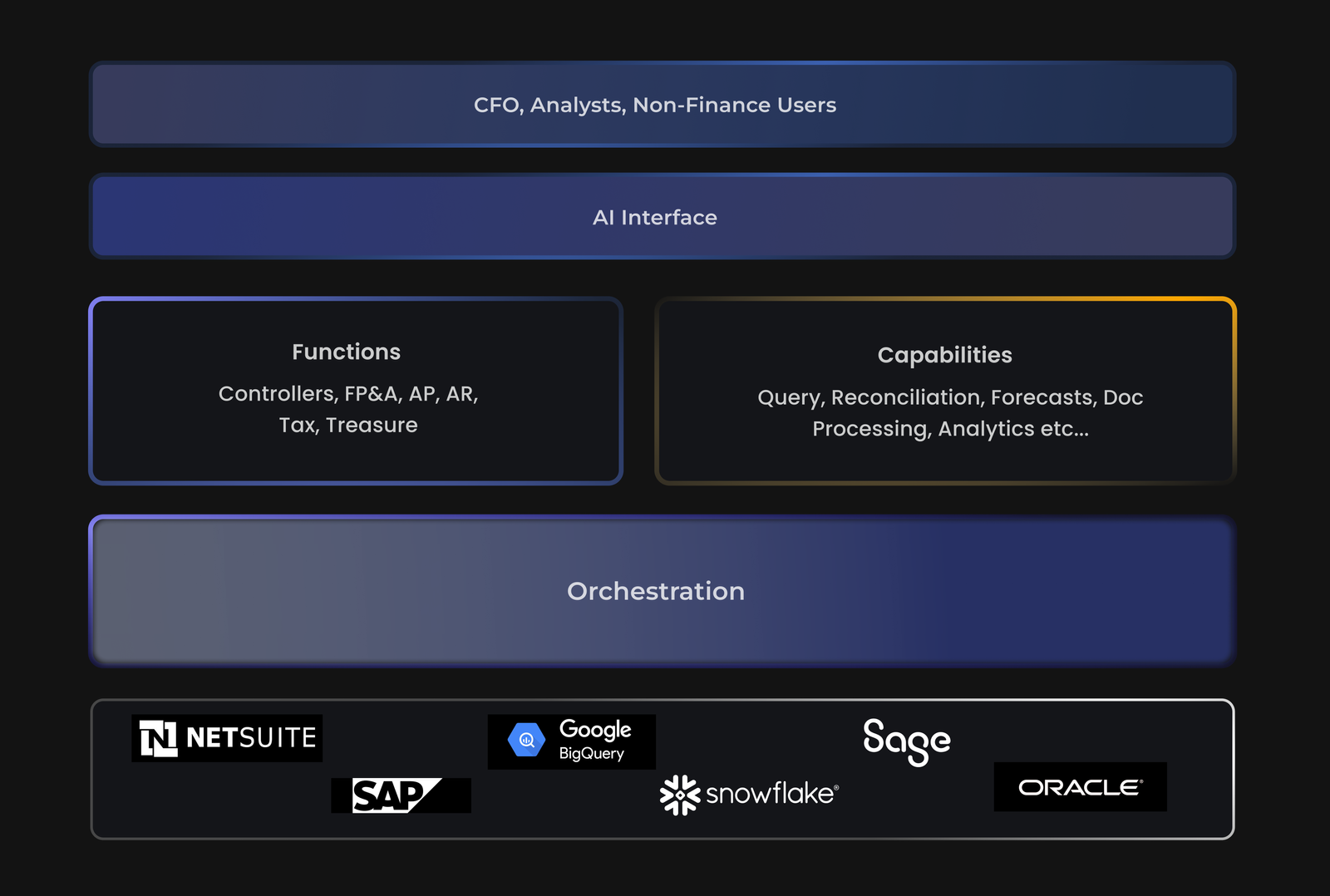
- A cross-module agent layer sits on top of Intacct through its API, extending the native agents to breaks and questions that span sources.
- Sage Intacct stays the system of record. Every agent action keeps its trail, and a named controller signs.
Sage Intacct has gone further than most mid-market ERPs on native AI. Its 2026 release ships five named finance agents, Close, AP, Time, Assurance, and Finance Intelligence, under a governance model Sage calls autonomous but accountable, alongside Sage Copilot and a Snowflake zero-ETL Data Cloud.
If you run Intacct, turning these on is the honest first move. They are well built and close to the ledger. What they do not do is carry a workflow that spans Intacct and the sources around it as one motion, which is where a cross-module agent layer fits on top.
Turn on the Sage Intacct agents first
Sage Intacct 2026 R1 introduced a set of named finance agents: a Close agent, an AP agent, a Time agent, an Assurance agent, and a Finance Intelligence agent, governed under a model Sage describes as autonomous but accountable, meaning the agents act within defined bounds and keep a reviewable trail.
Sage Copilot provides the conversational layer, and the Snowflake-based Data Cloud gives finance a zero-ETL analytics foundation that pairs the ledger with reporting and forecasting without moving data around by hand.
For an Intacct team, these agents are the first and cheapest win. They are built for Intacct's multi-dimensional model and require no separate platform to deliver value.
Where the native AI stops
The native agents are strong inside Intacct. The Close agent tracks and assists the close, the AP agent handles payables, and the Assurance agent watches for anomalies, all within the Intacct model.
What they work from is Intacct's own data. A break that spans Intacct, a bank feed, and a separate subledger, or a group running Intacct alongside another system, needs a view the native agents do not span. And the workflow that ties a reconciliation break to a variance narrative to a board note still crosses screens.
That is the gap: Intacct's agents carry their lanes well, and a cross-module agent layer carries the workflow between them, using the native agents as inputs rather than competing with them.
Reconciliation the agent layer carries end to end
How it runs
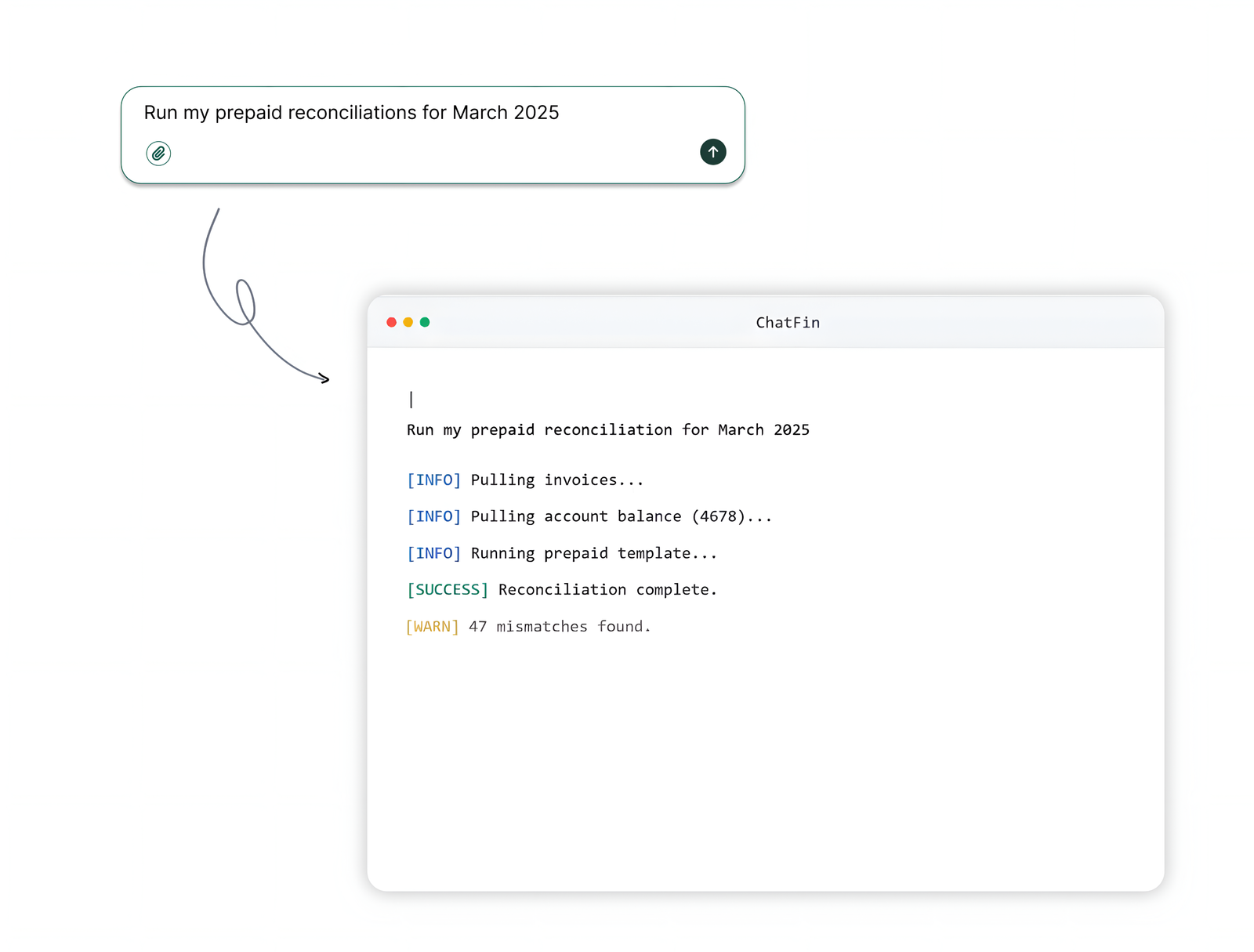
ChatFin reads transactions from Sage Intacct through its API, alongside bank feeds and subledgers, into one matching workspace. It normalizes and matches on rules and history, then flags each exception with a plain explanation.
Where the Intacct Close agent assists inside the ledger, the agent layer takes the cross-source remainder, resolving breaks that span Intacct and the systems around it, and rolling status into a live close view.
Intacct's agents carry their lanes well. Carrying the workflow between the lanes is the second job, and it is a different one.
Ashok ManthenaA close that coordinates itself
How it runs
GL activity, subledger data, and operational metrics are read continuously. The agent tracks dependencies, flags missing entries, and predicts where the close will stall, sitting alongside the Intacct Close agent rather than duplicating it.
Accountants get guided tasks in order and leadership gets a live progress view, with the variance narrative naming drivers across modules and systems.
AP and accruals, checked before they post
How it runs
The Intacct AP agent already handles a great deal of payables inside the ledger. The cross-module layer adds the three-way match against purchase orders and contracts and routes only the exceptions, with clean invoices flowing to payment with a full history.
For accruals, historical spend and contracts feed a suggested accrual with a rationale and a confidence range. Finance reviews and approves, and the accrued-to-actual variance improves the next estimate.
Ask a question, get a sourced answer
How it runs
Sage Copilot answers questions inside Intacct, and the Data Cloud broadens the analytics. The agent layer extends this to questions that cross the ERP boundary, joining Intacct data with bank, subledger, and contract sources, and returning an answer with every figure sourced.
The number and the reason arrive together, linked back to the transaction behind each figure.
Governance, write-back, and the person who signs
Every agent action is bounded the same way. ChatFin reads through the interfaces the ERP already supports, applies your policy, and prepares the write-back as a payload a person approves before it posts. Nothing moves money or touches the ledger on its own authority.
The trail is the point. Each step keeps the prompt, the response, and the prepared payload, so an auditor can see not just what changed but why the agent proposed it. The ERP stays the system of record, and a named controller still signs.
Native agents first, cross-module layer second, Intacct as the record throughout.
Enable Sage Intacct's Close, AP, Assurance, and Finance Intelligence agents, because they are real and close to the ledger. Then add an agent layer that carries the cross-source workflow the native agents do not span, reading and writing through the Intacct API with the trail intact.
Sage Intacct stays the system of record. The agents draft the work and a named controller signs, which is what keeps it defensible during an audit.
Turn on the native agents, then write down what they leave
This page recommends switching on the native Sage Intacct agents first. The step that makes this useful is the second one: keeping a plain list of what they leave to people. That list is your requirement for anything else, and it tends to be shorter and more specific than a vendor feature sheet.
Teams that do this find the residue clusters. Cross-module reconciliation, accruals that need judgment and multi-entity timing come up repeatedly. Having the list means a demo can be judged by whether it handles your actual items.
On working with AI agents, Chris Ortega (fractional CFO and CEO of Fresh FP&A) said this on the AgentCFO podcast.
“You're going to see a whole nother level of AI that is specific to the tool itself. We're gonna get back to where software in the office of the CFO and the agents in and of themselves are working in silos.”
Entries for the residue list
Record each item in a line or two, in plain words.
- The task. What the person had to do, such as clearing a cash difference or explaining an accrual.
- The reason. Why the native agent left it, for example it needed a decision or crossed an entity.
- The hours. A rough time per month, so the list can be ranked by effort.
- The evidence. The document or entry that shows the case, so it can be used as a test later.
Quick Answers on the Best AI Agents for Sage Intacct
What are the best AI agents for Sage Intacct?
This page recommends the native agents first, since they sit inside the platform, then a cross-module agent layer for what they leave.
Where does native Sage Intacct AI stop?
According to this page, at work that crosses modules or needs reconciliation carried end to end. Your own residue list will show where it stops for you.
What does a cross-module agent layer add?
Reconciliation end to end, a close that coordinates itself and checks on AP and accruals before they post, with Sage Intacct still the record.
What do people still do with agent output?
They review it. This page describes governance with write-back under a named person's control, so the agent prepares the work and the reviewer checks it before anything posts.
See agents carry a Sage Intacct close across sources.
Turn on the native agents, then bring one close. We will show cross-source reconciliation, the variance narrative, and governed write-back through the Intacct API, with Intacct as the system of record.