
Best AI Agents for Oracle EBS Finance Teams
Oracle E-Business Suite is a mature on-premise ERP with no modern embedded finance copilot, and Oracle steers users toward Fusion. Here is how an agent adds AI to EBS without a re-platform.
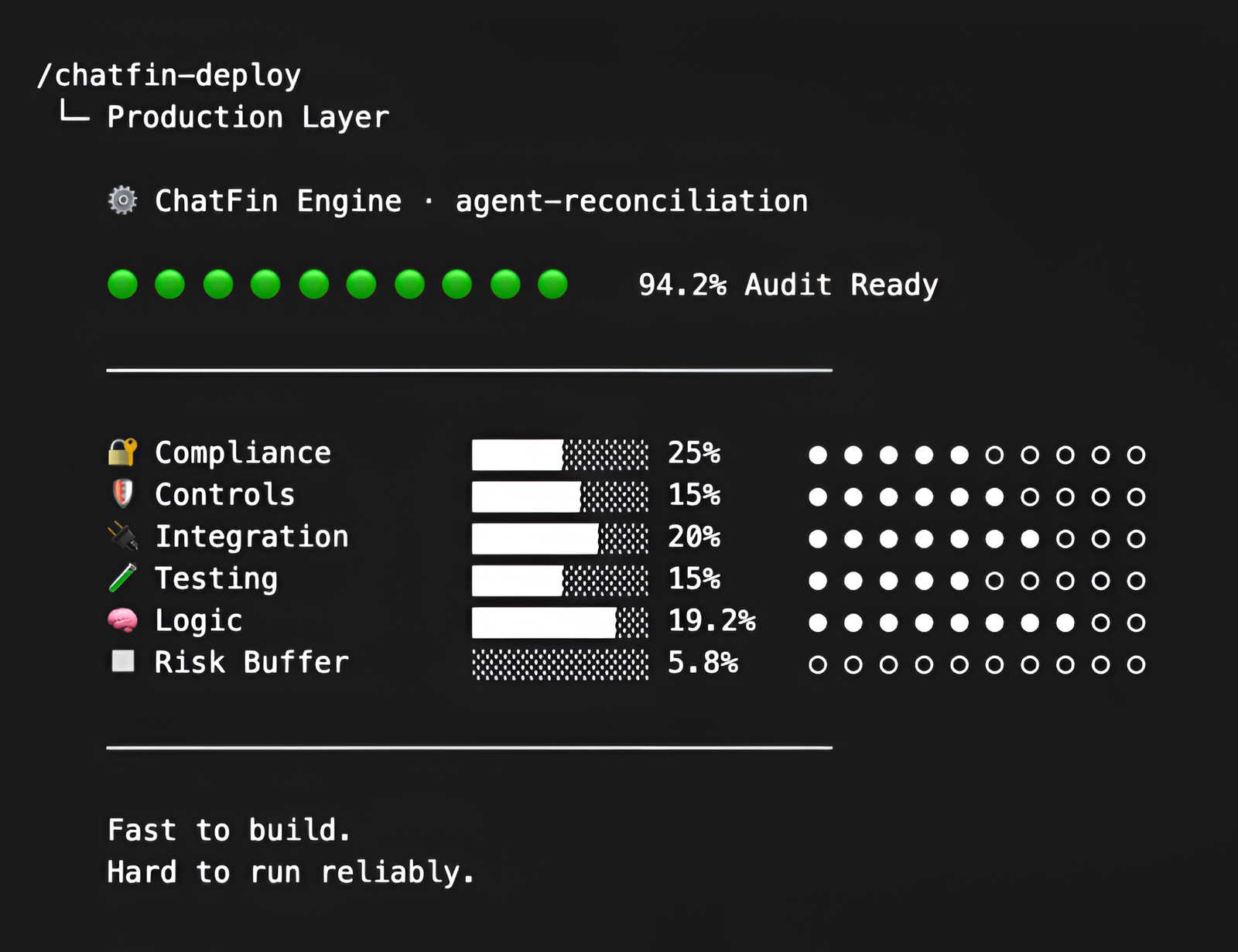
- Oracle E-Business Suite is a mature, heavily customized on-premise ERP that many large organizations still run, and it does not include the modern embedded finance AI copilot that Oracle's cloud products advertise.
- Oracle's roadmap steers EBS customers toward Fusion Cloud ERP over time, but that is a major re-platform with its own cost, timeline, and risk.
- An agent layer adds the AI, reconciliation, exceptions, accruals, close coordination, on top of EBS through its supported interfaces, without a re-platform.
- EBS stays the system of record; write-back is governed with a full audit trail and a person signing.
Oracle E-Business Suite is a workhorse. Large organizations run deeply customized EBS environments that have been tuned over many years, and they run reliably. What EBS does not have is the modern embedded finance AI copilot, matching assistants, generative close tools, natural-language queries, that Oracle's Fusion cloud products now advertise.
Oracle's answer is Fusion, and over time that is a legitimate path. But moving off a mature, customized EBS environment is a major re-platform with real cost and risk, and it happens on the organization's timeline. In the meantime, an agent layer adds the AI to EBS as it is, without the re-platform.
The honest state of AI on Oracle EBS
Oracle EBS does not ship a modern embedded finance AI copilot. Its strengths are depth, configurability, and the reliability of an environment tuned over years. What it lacks is the native AI, matching assistants, generative flux analysis, natural-language queries, that Oracle builds into Fusion Cloud ERP.
Oracle's roadmap encourages EBS customers to move to Fusion for that AI future. That is a real long-term option, and also a re-platform with significant cost, timeline, and change-management weight.
The honest recommendation is not to pretend EBS has AI it does not. It is to recognize that adding AI to EBS does not require re-platforming first.
Where the native AI stops
The gap on EBS is not a single missing feature; it is that the reasoning work of finance, reconciliation, exceptions, accruals, variance explanation, is manual, because there is no native AI to assist it.
For an agent layer that is a clean situation: there is nothing to duplicate or work around. The agent adds the reasoning layer EBS never had, through the interfaces EBS already exposes, REST services, BI Publisher, and the standard data-integration paths.
Reconciliation the agent layer carries end to end
How it runs
ChatFin connects to Oracle EBS through its supported integration interfaces, alongside bank feeds and subledgers, and reconciles across them in one workspace, bank to book and subledger to general ledger.
Each reconciling item comes with a plain explanation and a drafted resolution. The straightforward items clear; the ambiguous ones are held for a person with the reasoning attached, so the reconciliation is worked rather than done entirely by hand across a large EBS environment.
You do not have to re-platform off Oracle EBS to add AI to it. An agent layer adds the reasoning EBS never had, through the interfaces EBS already exposes.
Ashok ManthenaA close that coordinates itself
How it runs
On top of the reconciliations, the agent coordinates the close: it tracks what is done and what remains across a complex EBS ledger structure, drafts the recurring entries, and orders the open items by size and uncertainty.
For an EBS team running a largely manual close, this is the difference between reconstructing the close each period and reviewing prepared work.

AP and accruals, checked before they post
How it runs
On AP, the agent runs the three-way match against purchase orders and receipts, codes each invoice with a rationale consistent with your EBS structure, and drafts the accruals for goods received not invoiced, holding exceptions for review.
Duplicate detection runs across the full AP population, an important control at EBS scale, so a duplicate invoice is caught before the payment leaves.
Ask a question, get a sourced answer
How it runs
EBS has no modern natural-language query of its own, so this is a new capability. Because the agent has read across the EBS modules and the bank and subledger data, you can ask about the close in plain language and get a sourced answer.
Every answer links back to the underlying EBS transactions, so you are reviewing evidence rather than trusting a summary, and you gain a capability EBS never had without leaving it.
Governance, write-back, and the person who signs
Every agent action is bounded the same way. ChatFin reads through the interfaces the ERP already supports, applies your policy, and prepares the write-back as a payload a person approves before it posts. Nothing moves money or touches the ledger on its own authority.
The trail is the point. Each step keeps the prompt, the response, and the prepared payload, so an auditor can see not just what changed but why the agent proposed it. The ERP stays the system of record, and a named controller still signs.
Add AI to EBS now, without a re-platform you are not ready for.
Oracle EBS has no modern finance AI copilot, and Oracle points toward Fusion over time. An agent layer adds the reasoning work, reconciliation, exceptions, accruals, close, on top of EBS as it is.
EBS stays the system of record, write-back is governed with a full audit trail, and a person signs every entry. When you do move to Fusion, the agent layer moves with you.
See an agent add AI to your Oracle EBS.
Bring a close. We will show the agent reconciling across EBS, drafting accruals, and coordinating month-end, all without a re-platform.