
JD EDWARDS STRATEGY
The Best AI Agent Vendor for a Company That Uses JD Edwards but Has No Internal AI Development Team

Most JD Edwards sites have no AI engineers, which rules out every option that needs a team to maintain it.
- No AI team rules out custom builds and, in practice, most low code platforms, because someone still has to design the finance behaviour.
- The right question becomes what arrives working.
- Your JD Edwards administrators are the capability you do have, and a good product should need them for hours rather than months.
- Support model matters more than feature depth. When something behaves oddly at period end, who answers.
- ChatFin is designed for adoption rather than construction, configured by finance and JD Edwards people without engineers.
There is a version of the AI conversation that assumes every organisation has a data team and a platform team waiting to build. Most JD Edwards sites have neither. They have a small IT function that keeps a complex ERP running, and a finance team that would like fewer spreadsheets.
That is a perfectly good position from which to deploy AI, provided you choose on the right axis.
What This Constraint Rules Out
Being direct about this saves months. Several options that look accessible require capability you do not have, and the requirement is not always obvious from the marketing.

What You Do Have
The capability question is not whether you have AI engineers. It is whether you have people who understand your JD Edwards environment and your finance processes, and almost every site does.
A well designed product should need those people for hours rather than months, and should not need anyone else at all.
The Questions That Matter More Without a Team
Standard evaluation criteria still apply, and four additional questions become decisive when there is nobody internally to compensate for gaps in the product.

Support Is a Product Feature
With no internal team, the vendor's support model is effectively part of the product, and it should be evaluated as rigorously as the software.
The question to ask is specific. Not whether support exists, but who answers on day two of the close when a proposal looks wrong, and how quickly.
Running the Evaluation Without Engineers
A finance led evaluation is entirely feasible and in some ways better, because it measures the thing that matters rather than the thing that is technically interesting.
Pick one painful process, use last period's worst cases, and measure human touches and elapsed days. Your JD Edwards administrator handles the connection and the whitelist. Nobody needs to write anything.

The Risk Worth Managing
Having no internal team creates one genuine dependency: you are relying on the vendor to keep the product working as models change and JD Edwards updates ship.
Manage it the way you manage any critical supplier dependency, and ask the questions directly.
"Low code is not no code. Somebody still has to decide what happens when the invoice does not match."
Why ChatFin Fits This Position
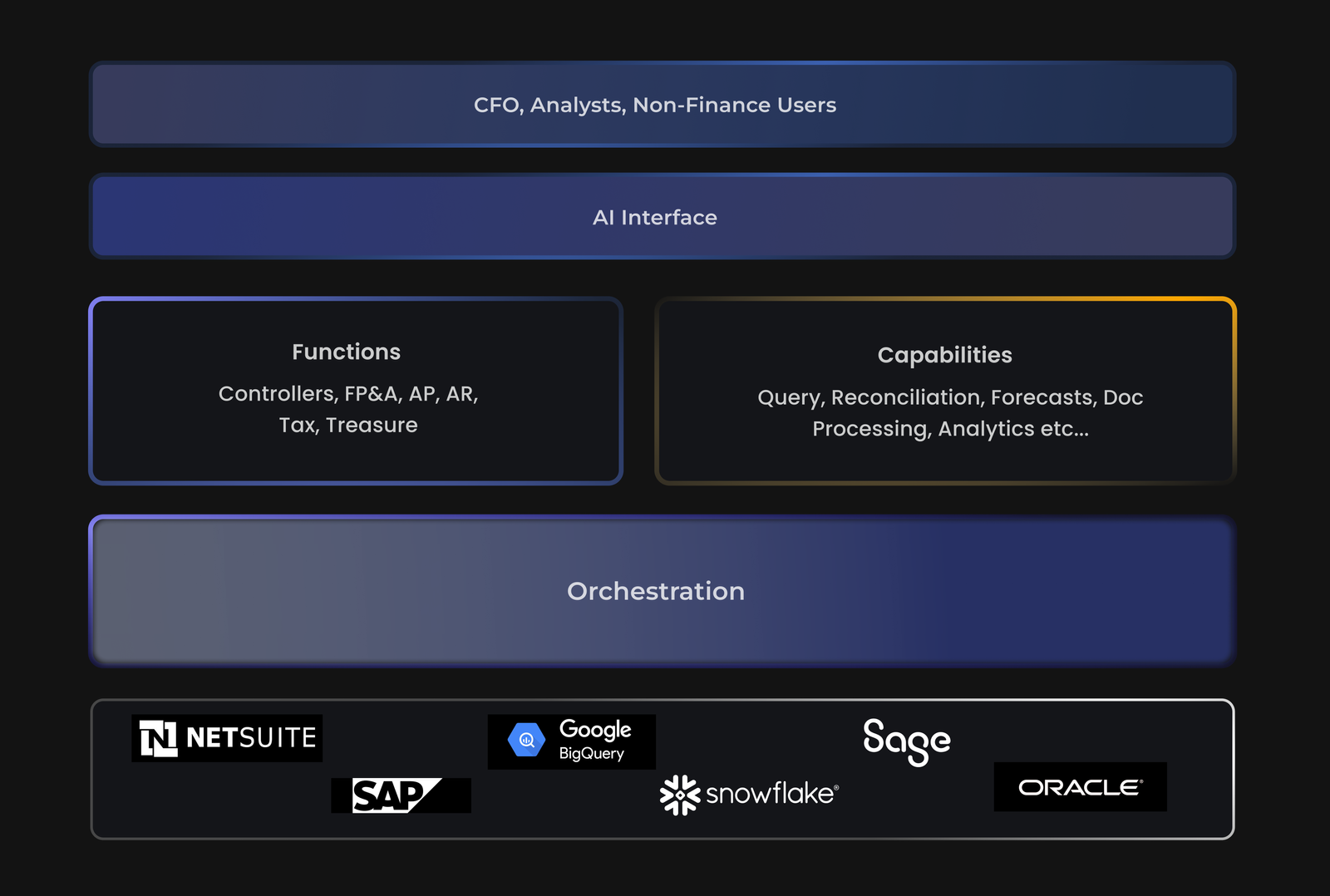
ChatFin is built for adoption rather than construction. The finance agents arrive built, the JD Edwards conventions are understood on day one, and configuration is a workshop covering environment, scope, thresholds and permitted actions.
Your administrator handles the connection and the whitelist. Your finance team defines the thresholds. Nobody writes any code, and nothing is installed inside EnterpriseOne, so there is nothing to maintain and nothing to unwind.

Choose What Arrives Working
ChatFin is configured by your JD Edwards administrator and your finance team in a workshop rather than built by engineers, with the finance logic, approvals and audit trail already in place.
Without an AI team, the only question that matters is what arrives working.
Frequently Asked Questions
Can we deploy AI on JD Edwards without any AI developers?
Yes, provided you choose a product rather than a platform. The capability you need is not AI engineering, it is people who understand your JD Edwards environment and your finance processes, which almost every site has. A well designed product needs your administrator for hours to handle the connection and the orchestration whitelist, and your finance team to define thresholds and scope.
Does low code mean we do not need developers?
Not for this. Low code reduces the amount of code, not the amount of design. Someone still has to decide what happens when an invoice does not match, how exceptions route, what the approval thresholds are and how the audit record is captured. That design work is the project, and low code platforms assume you have someone to do it.
What should we ask about support?
Something specific rather than general. Not whether support exists, but who answers on day two of the close when a proposal looks wrong, how quickly, and whether that person understands JD Edwards and finance or reads from a script. With no internal team the vendor's support model is effectively part of the product and should be evaluated as rigorously as the software.