
Autonomous AR Agents: The Shift From Manual Collections to Intelligent Automation
Autonomous AR agents are fundamentally changing how finance teams operate. Moving from manual, reactive workflows to intelligent, 24/7 automated processes powered by AI agents that learn and improve continuously.
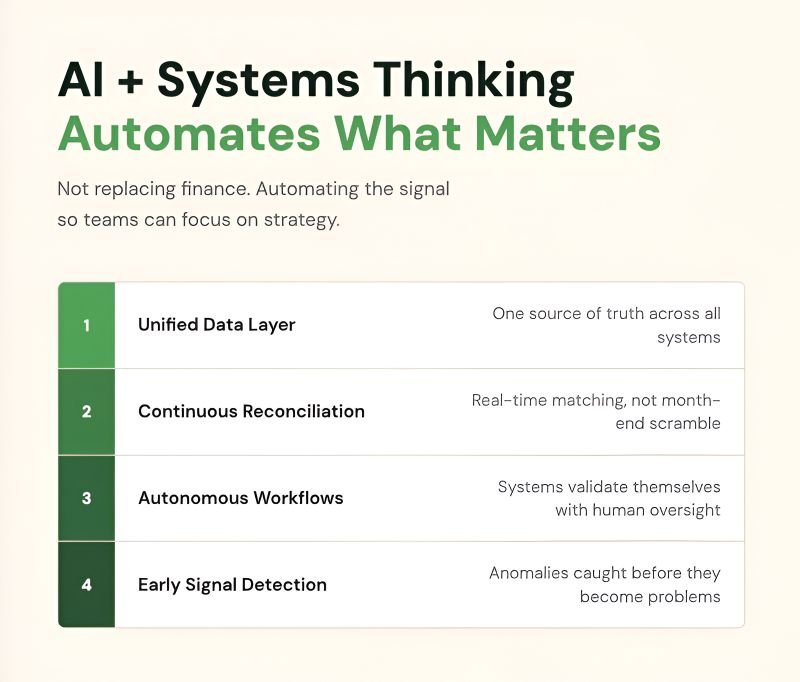
- What Are AR Agents AI agents that autonomously manage receivables workflows: collections, cash application, dispute resolution, payment prediction.
- Autonomous Operation Agents run 24/7 without human intervention. AR team only intervenes on exceptions, relationship issues, or escalations.
- Continuous Learning Agents learn from outcomes, adjust strategies, improve effectiveness over time without reconfiguration.
- Operational Impact 80%+ automation of routine AR tasks, freeing teams for strategic work and relationship management.
- Business Results Measurable outcomes: DSO reduction, collection improvement, cash acceleration, and cost savings.
The AR function is at an inflection point. For decades, AR has been a collections-focused, manually-intensive function. Finance teams managed exceptions and pushed hard on at-risk accounts. This model has reached its limit. The new model is autonomous agents that run the entire receivables operation with minimal human intervention.
What Are Autonomous AR Agents?
Autonomous AR agents are AI systems that operate continuously without human instruction. They manage receivables workflows: generating and delivering invoices, predicting payment behavior, optimizing collections, managing disputes, applying cash, and providing real-time insights. Unlike traditional software that automates specific tasks, agents make decisions, learn from outcomes, and improve their strategy continuously.
Think of an AR agent not as a tool, but as a 24/7 AR specialist that never sleeps, never forgets, and continuously improves. Unlike a person, it can operate across all customers simultaneously, learning from millions of data points and adjusting strategy in real-time.
How Autonomous AR Agents Operate
The fundamental difference between traditional AR automation and autonomous agents is autonomy:
Traditional AR Automation
- Static workflows: Configured once, run the same way every time
- Reactive: Responds to specific triggers (invoice overdue, customer email)
- No learning: Never improves. If a strategy doesn't work, humans must reconfigure
- Limited scope: Automates specific tasks, not the entire function
- Human-dependent: Requires continuous oversight and adjustment
Autonomous AR Agents
- Adaptive workflows: Adjust strategy based on customer, circumstances, and outcomes
- Proactive: Takes actions before problems occur (predicts payment issues, prevents late payments)
- Continuous learning: Improves effectiveness over time. Learns which strategies work best for each customer segment
- End-to-end scope: Manages entire receivables process from invoice to cash and beyond
- Exception-based: Humans intervene only on exceptions that require judgment or relationship management
The time comes back somewhere
Automation in collections frees hours, and the value depends entirely on what the team does with them.
So I think that first thing it's doing is freeing up time, which should allow you to focus more on the business, focus on the analysis, the judgment.
Paul Barnhurst, on the AgentCFO podcast
Decide in advance which accounts your collectors will focus on once the routine chasing is handled.
The Three Core Capabilities of Autonomous AR Agents
1. Intelligent Prediction
Before AR agents can act, they must understand payment likelihood. Advanced agents build multiple prediction models:
These predictions drive all downstream agent decisions. Better prediction = better strategy = better outcomes.
2. Intelligent Orchestration
With predictions, agents orchestrate the optimal workflow for each situation. This is where agents diverge dramatically from static automation:
The result: 85%+ of collections workflows run on full automation, with human specialists only handling truly exceptional situations.
3. Continuous Improvement
The third capability separates true autonomous agents from automated workflows: continuous learning.
"Our AR agents started by reducing DSO by 18%. After 6 months of learning, that improvement grew to 25%. The agents kept getting better without any human reconfiguration. That's the power of continuous learning." - Controller, Enterprise Company
Autonomous AR Agents in Practice: The Operational Model
Invoice-to-Cash Automation
Traditional Model: Finance team creates invoices at period close, manually assigns to collections if late
Agent Model: Agents autonomously manage entire cycle:
- Invoice generated immediately (not at period close)
- Delivered automatically via optimal channel
- Delivery confirmed and tracked
- Payment predicted immediately
- Collections workflow triggered before invoice becomes late (proactive, not reactive)
- Customer contacted at optimal time via optimal channel with personalized message
- Payment received and applied automatically
- End-to-end cycle managed without human intervention (except exceptions)
Collections Management
Traditional Model: Collectors manually review aging AR, prioritize accounts, send generic reminders
Agent Model: Agents run intelligent collections 24/7:
- Continuous monitoring of all accounts (not just overdue ones)
- Predictive identification of payment risk before it happens
- Automated dunning sequences tailored to customer segment
- Intelligent escalation (only truly at-risk accounts reach collectors)
- Real-time strategy adjustment based on customer response
- Collectors focus on strategic accounts and relationship management, not mechanical work
The Business Impact: Why AR Teams Embrace Autonomous Agents
For AR Teams
- Reduced Busywork: 80%+ of mechanical tasks (sending reminders, tracking documents, applying payments) are automated
- Higher Impact Work: AR specialists shift to relationship management, exception resolution, and strategy
- Faster Resolution: Agents resolve issues 24/7 without waiting for office hours
- Better Decisions: Agents provide data-driven insights on which customers need immediate attention
For Finance Leadership
- Measurable Results: 20-25% DSO reduction, 30-35% collection improvement, 80% automation rates
- Scalability: Handle 2-3x transaction volume without proportional headcount increase
- Cash Impact: $5-15M working capital unlocked for mid-market companies
- Cost Efficiency: Significant reduction in AR FTE requirements as agents handle volume
For the Business
- Accelerated Cash: Faster cash inflow improves business flexibility
- Customer Experience: Intelligent agents respect customer payment preferences and reduce friction
- Operational Efficiency: Finance team shifts from reactive to strategic
- Competitive Advantage: First-mover advantage in AR automation
Implementation: Building the Autonomous AR Operating Model
Phase 1: Foundation (Week 1-4)
- Assess current AR processes and identify automation opportunities
- Deploy basic invoice automation (generation, delivery, tracking)
- Build baseline prediction models using historical payment data
Phase 2: Agent Activation (Week 5-8)
- Deploy collections agents for core customer segment
- Configure dunning sequences and escalation rules by segment
- Set up real-time monitoring dashboard
Phase 3: Optimization (Week 9-12)
- Scale agents across all customer segments
- Retrain models with 90+ days of new data
- Adjust strategies based on performance data
- Measure DSO improvement and AR efficiency gains
The Future of AR Is Autonomous
Autonomous AR agents represent a fundamental shift in how finance teams operate. The organizations deploying agents today are building a structural advantage that will be difficult to close. By 2027, AR functions without agents will be as outdated as AR functions without email was in 2010.
The question is not whether AR will become autonomous. The question is whether your AR function will lead or lag the transition. The 20-25 day DSO advantage autonomous agents deliver is a permanent competitive advantage in working capital.
The ChatFin Advantage: Enterprise-Grade Autonomous AR Agents
ChatFin is the first unified autonomous AR platform built on agentic AI. 100+ pre-built AR agents manage every receivables function: invoice generation, delivery, collections, cash application, dispute resolution, and customer risk assessment. Agents operate continuously, learn from outcomes, and improve effectiveness without reconfiguration. Running directly in your ERP, ChatFin turns AR from a cost center into a cash engine.
Learn more: Autonomous Finance Agents: The Future of AR & AP
Additional resource: Agentic AI for Finance: How Agents Transform Finance Functions