
AI for SAP ECC: Modernize the Finance Function Without Migrating First

Gartner projects that 17,000 companies, close to half the install base, will still be running SAP ECC in 2027, the year mainstream maintenance ends. Most are mid market and large enterprises with heavily customized, deeply stable systems. The question is not whether ECC is legacy. It is what your finance function does during the 12 to 24 months a migration actually takes.
- Roughly 35,000 enterprises still run SAP ECC. At the end of 2024, only about 39% of them had migrated to S/4HANA (Gartner).
- There are two deadlines, not one. EHP 0 to 5 mainstream maintenance ended 31 December 2025. EHP 6 to 8 ends 31 December 2027. Extended Maintenance runs to 2030 at a premium of roughly two percentage points.
- Gartner projects 17,000 ECC holdouts in 2027 and 13,000 still on it in 2030. Forrester and IDC independently put the figure at 40 to 45%.
- A typical S/4HANA migration takes 12 to 24 months, and a platform migration does not, by itself, shorten your close.
- ChatFin connects to ECC through its supported interfaces (RFC/BAPI, IDoc, OData via NetWeaver Gateway) with no change to core configuration and no migration prerequisite.
Say “SAP ECC” in a room of software people and you will get a knowing look: legacy, on premise, ABAP, something a bank still runs in a basement. The install base says otherwise. Roughly 35,000 enterprises worldwide still run ECC, and at the end of 2024 only about 39% of them, around 14,000, had completed the move to S/4HANA, according to Gartner. These are not stragglers. They are manufacturers, distributors, pharma companies and industrial groups with heavily customized, extremely stable systems that close the books every month without incident.
The interesting question is not whether ECC is legacy. It is what a finance team does with the next 12 to 24 months, the length of a typical S/4HANA migration, while the close still has to happen on the system they already have.
The install base nobody puts on a slide
Vendor marketing has quietly agreed to pretend ECC is already gone. The analyst numbers do not support that story, and they have not for years.
Forrester’s Akshara Naik Lopez put the operational reality plainly: support from SAP is ending for the product, but that does not mean the ECC environment suddenly stops working. Ask these companies and they will tell you their ECC estate is robust and stable. The software does not break on 1 January 2028. The option set does.
Migration is not the fix
ECC estates get pushed toward S/4HANA as if the new platform will repair the processes running on it. It will not.
If I don't fix my process, I'm not going to get the IPO.
Vin Messina, on the AgentCFO podcast
Fix the process on ECC first, with the agents below doing the grunt work. Migrating a broken process only moves it.
Two deadlines, not one
Most coverage flattens every ECC customer into a single “2027 deadline.” That framing is wrong, and some companies are already past their date without realising it. The Enhancement Package level you are running determines which deadline applies to you.
If you do not know your EHP level, that is the first thing to check. The SAP Product Availability Matrix or SAP Note 2269324 will tell you. It changes which of the paragraphs above is about you.

The uncomfortable part: migrating does not fix your close
Here is the thing most S/4HANA business cases skate past. A platform migration is a platform migration. It changes the database and the data model. It does not, by itself, change the fact that your team still exports the trial balance to Excel, still chases forty budget holders for accruals, still writes variance commentary by hand at 9pm on day six.
A slow close on ECC becomes a slow close on S/4HANA, running on a newer database. Meanwhile the migration itself consumes 12 to 24 months of your best finance and IT people. That is 12 to 24 month end closes run on the system you already have, while the organisation waits for a platform change that was never going to shorten them on its own.
“The system does not break on 1 January 2028. The option set does. And the close does not get faster because the database got faster.”
How AI actually connects to ECC
ECC is not a black box. It ships with a mature, documented, fully supported set of integration surfaces, the same ones external finance software has used for two decades. Nothing here requires a migration, a middleware platform, or a change to your core configuration.
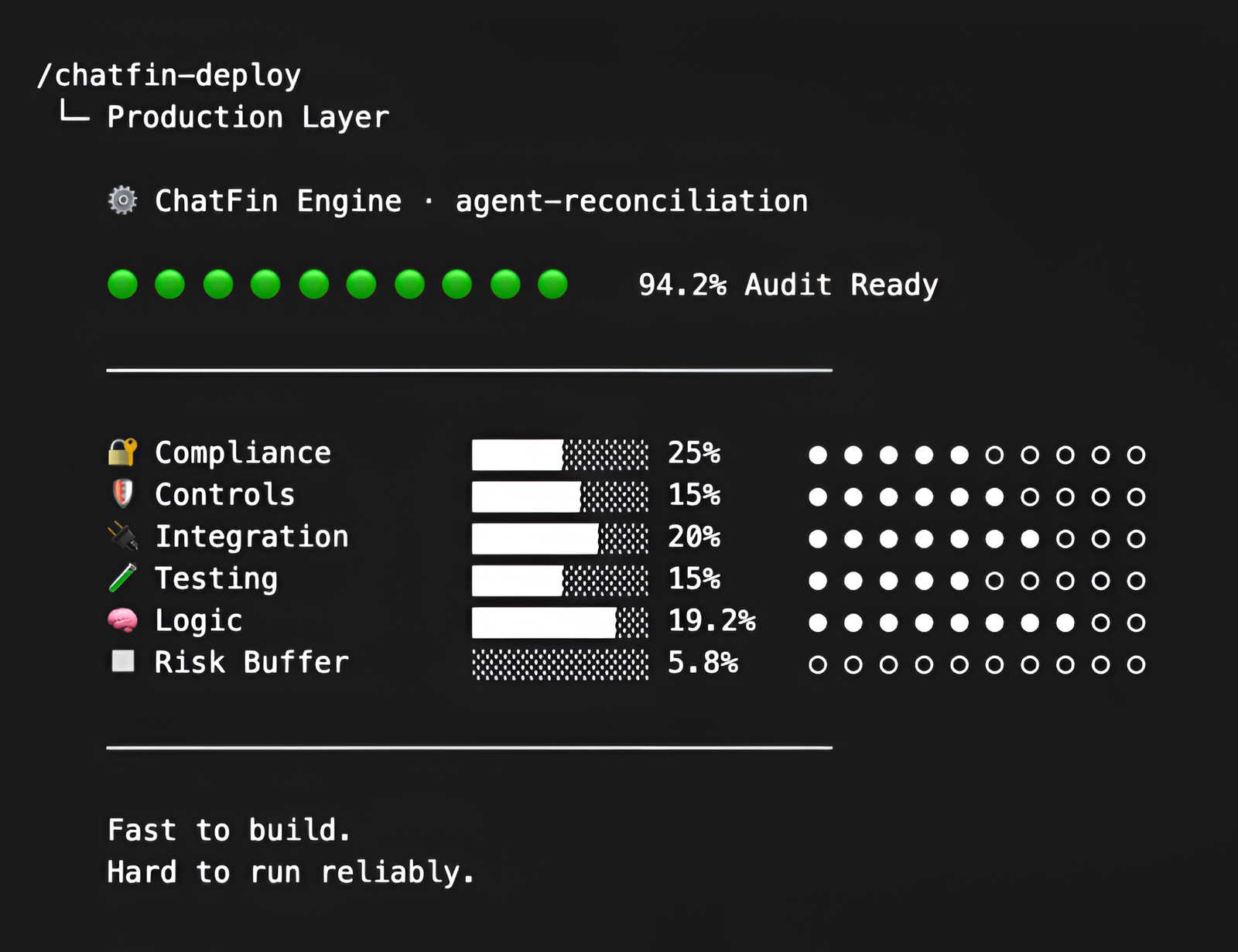
ChatFin sits on top of that surface. It reads the ledger through supported interfaces, drafts the reconciliation, proposes the journal entry, and posts it back through a BAPI so ECC’s business rules run exactly as they would if a human had keyed it. No core modification. No migration prerequisite. No new system of record.
What breaks when you get ECC integration wrong
This is the section most vendor pages leave out, and it is the one that decides whether a project works. ECC has sharp edges. They are well documented and entirely survivable, if you design for them up front rather than discovering them in production.
None of this is exotic. It is the accumulated knowledge of twenty years of SAP integration work, and it is the difference between an AI agent that posts a clean journal entry and one that posts three of them.

Where to be careful
Two things are worth naming plainly, because both are common and both are avoidable.
ChatFin is also not an ERP, not a system of record, and not a migration tool. It will not move you to S/4HANA and it does not pretend to. It is the AI layer that makes the ERP you are actually running, today, in July 2026, with a 2027 deadline on the calendar, behave like a modern one.
Your ERP Is Not the Problem. The Work On Top of It Is.
ChatFin reads your ECC ledger through supported interfaces, reconciles bank and subledger to GL, drafts the accruals and variance commentary, and posts approved entries back through BAPIs so your business rules run exactly as they always have. On SAP ECC. Today. Whatever you decide about 2027.
Seventeen thousand companies will still be on ECC in 2027. The ones that win will not be the ones that migrated fastest. They will be the ones whose finance team stopped doing the work a machine should have been doing all along.