
JD EDWARDS OPERATIONS
AI Platforms That Create Inventory Transfer Requests, Order Notes, Service Requests and Other Controlled JD Edwards Transaction Drafts
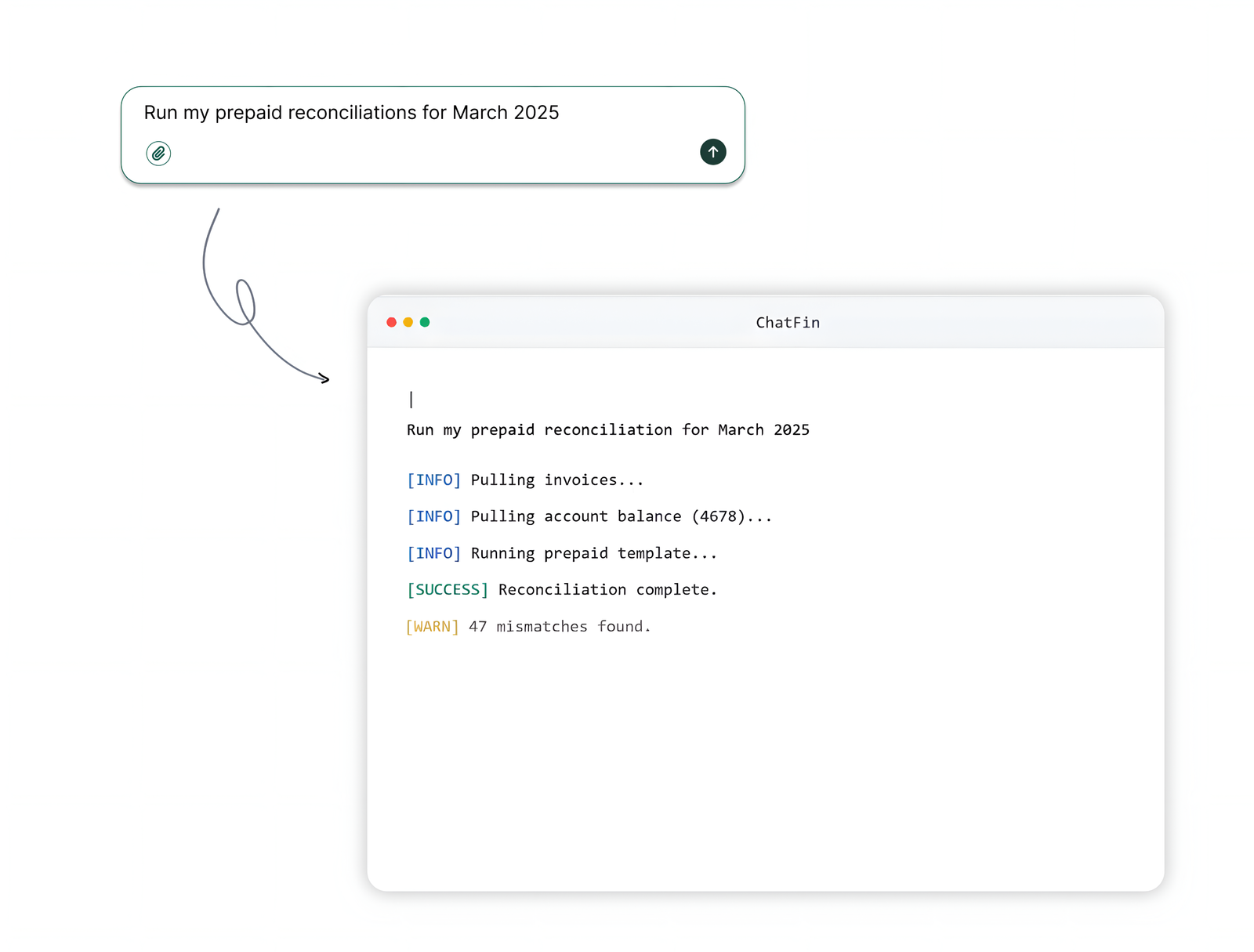
The agent assembles the transaction, a person with authority approves it, and a published orchestration creates it.
- Analysis that ends in a recommendation nobody actions has not saved anybody time. Drafting the transaction is what closes the loop.
- Start with the low risk transaction types. Notes, attachments and status updates carry little exposure and remove real friction.
- Inventory transfers are the highest value early candidate because they resolve shortages using stock you already own.
- Every write must run through a published orchestration so item ledger movement, costing and availability update correctly.
- ChatFin drafts, routes for approval and creates through supported interfaces, keeping a complete record of each step.
A common outcome of analytics projects is a very good report that changes nothing. The finding is correct, the recommended action is sensible, and executing it still requires a person to open the ERP, find the right screen and key it in, so it joins a queue and frequently never happens.
Drafting removes that gap. The same system that identified the problem assembles the response, and a person's role becomes approving rather than transcribing.
Start With the Low Risk Transaction Types
Introducing write capability by risk tier is both safer and faster than a wholesale switch on, because it builds evidence that the agent behaves before anything material is at stake.

Drafts that get most of the way
A draft entry that lands mostly right changes an accountant's job from preparing to reviewing. That shift is where the time comes back.
Having them review and get to 80 % of the story and they only spend 10%, 20 % of their time on that value add.
Chris Ortega, on the AgentCFO podcast
Starting with low-risk transaction types, as below, lets the team build confidence in the drafts before the stakes rise.
Why Inventory Transfers Are the Best Early Candidate
Transfers combine high value with contained risk. Nothing is bought, nothing is sold, no external party is committed and no money moves. Stock you already own moves between locations you already control.
They are also the natural output of the analysis an agent is already doing, since identifying a shortage at one branch alongside surplus at another is the comparison nobody performs manually.
The Non Negotiable Design
Regardless of transaction type, the same three rules apply, and they are the reason this can be deployed at all in an environment with real controls.
The agent never writes directly to tables and never drives the screen. It assembles a proposal, a person approves, and a published orchestration executes so the application's own logic runs.

Why Direct Writes Are Wrong Here Too
The temptation with inventory is stronger than in finance because the tables look simple. Adjusting a quantity appears to be a single field update, and it very much is not.
A movement through the application updates the location record, writes the movement to the item ledger with the correct document type, applies costing and updates availability. A direct write does the first of those and silently omits the rest, producing stock records that will not reconcile and a ledger that has no record of how the quantity changed.
Order Notes and Service Requests
These are unglamorous and remove more friction than most people expect, because they are the mechanism by which context currently gets lost.
When an agent explains a delay or resolves a shortage, recording that explanation against the order means the next person who looks does not repeat the investigation. It is a small capability that compounds.
Controls and What Auditors Will Ask
Operational write capability attracts the same scrutiny as financial write capability, and the answers should be equally concrete.
The record should show what the agent proposed, on what evidence, who approved it, what they saw and what resulted. That is generally stronger evidence than the manual equivalent, where the reasoning lived in somebody's head.
"A recommendation nobody actions has not saved anyone any time. It has just moved the work to a report."

How ChatFin Handles Drafts
ChatFin assembles transfer requests, notes, attachments, status updates and service requests as complete drafts with every derived value visible and the analysis that produced them attached.
Creation happens only through published orchestrations you have whitelisted, after a named approver confirms, so the application's own logic runs and the resulting movement is properly recorded in both availability and the item ledger.

Close the Loop From Finding to Transaction
ChatFin drafts inventory transfers, order notes, attachments, status updates and service requests in JD Edwards, routes them to a named approver, and creates them through whitelisted orchestrations with a complete record.
The analysis is only worth something if the transaction it implies gets created.
Frequently Asked Questions
Which JD Edwards transactions should an AI agent draft first?
Introduce write capability by risk tier. Notes, attachments and status updates carry almost no exposure and remove real friction. Service requests commit nothing by themselves. Inventory transfers are the best high value early candidate because nothing is bought or sold, no external party is committed, no money moves, and the movement is reversible if it goes to the wrong location.
Why can the agent not just update the quantity directly?
Because a stock movement is not a single field update, even though the tables make it look like one. Moving stock through the application updates the location record, writes the movement to the item ledger with the correct document type, applies costing and keeps committed quantities consistent. A direct write does the first of those and silently omits the rest, producing stock records that will not reconcile.
What does the audit record contain?
What the agent proposed, the evidence it based the proposal on, who approved it, what they saw at the time, any changes they made, and the resulting document number. There should also be a whitelist of permitted orchestrations reviewable on one page, and a defined reversal route with its own approval for anything approved in error.