
SAP BUSINESS ONE AI
What AI Tools Can Analyse SAP Business One Financial, Customer, Supplier, Purchasing, Inventory, Production and Sales Data?
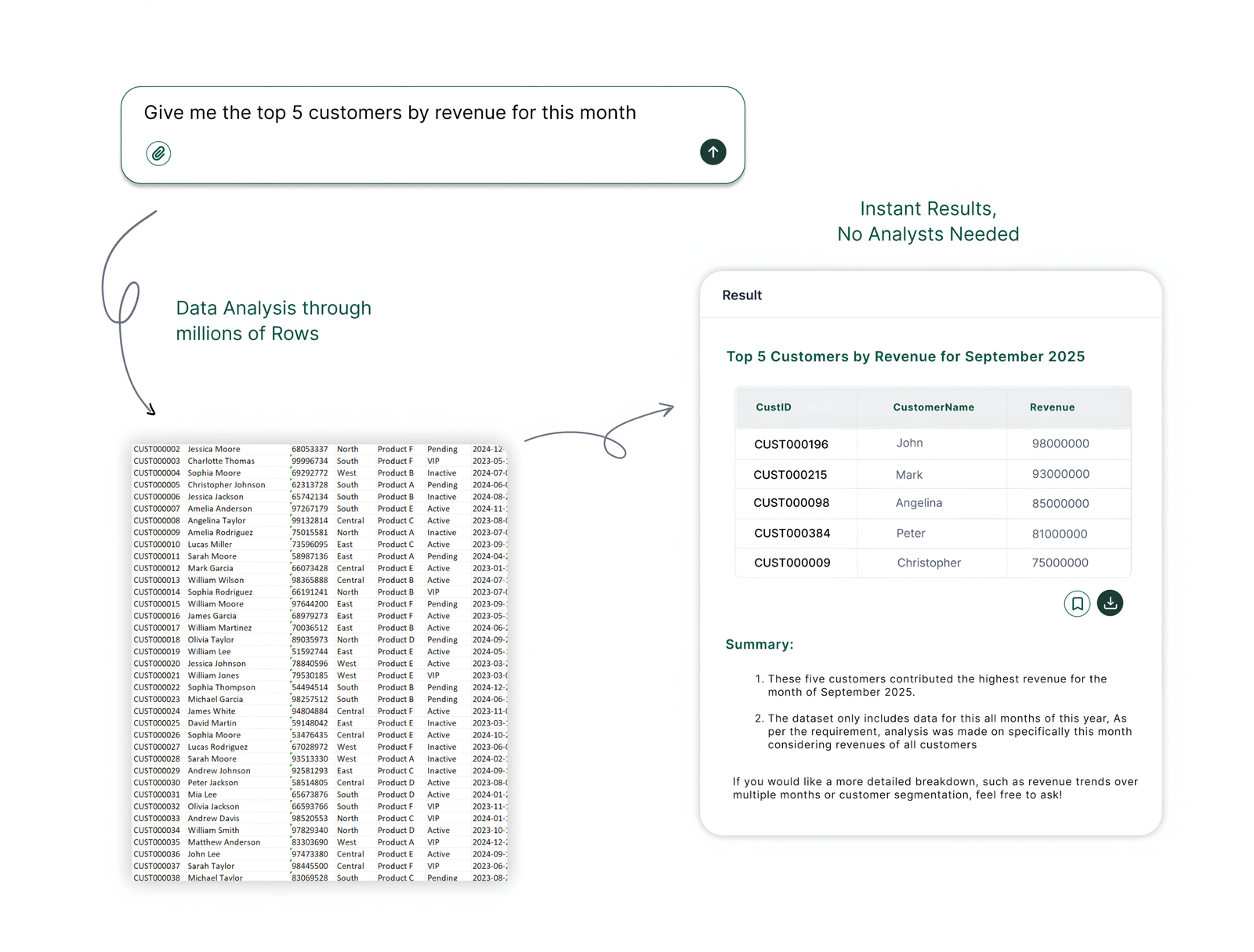
The advantage SAP Business One gives you is that finance and operations sit in one system, so the analysis that matters most, the kind that crosses modules, is a query rather than a data project. The tools that only look at one module miss exactly the questions worth asking.
- The valuable analysis crosses modules, and SAP Business One holds them in one system, so it is a query rather than an integration.
- Financial, customer, supplier, purchasing, inventory, production and sales data can all be analysed together.
- Analysis differs from a dashboard: it answers the specific question and explains the cause, rather than displaying fixed metrics.
- Every finding should carry the rows behind it, so it can be acted on rather than merely believed.
- ChatFin analyses across every SAP Business One module from live data, with the supporting rows attached.
Analysing SAP Business One data is usually framed module by module: sales analytics, inventory analytics, financial analytics. The most useful questions ignore those boundaries, and answering them is where a smaller company most lacks tooling.
Because SAP Business One holds everything in one system, cross module analysis is available without a warehouse or an integration project.
Why One System Is the Advantage
The analysis that produces the most value is the kind that crosses modules, and in most organisations that requires exporting from several systems and joining them.
SAP Business One holds finance and operations together, so the cross module question is a query, not a data project. That is a structural advantage worth using.

The data travels with the transaction
SAP Business One keeps sales, inventory and finance in one database. That is a real advantage for analysis, because the operational context is already attached to the number.
You need to understand how data flows across the entire organization, not just within finance. Treat your data like a product and look across the company at your internal customers.
Caitlin Haberberger, on the AgentCFO podcast
Analysis that follows data across the business answers better questions. One system means less stitching before you can start.
What Can Be Analysed
Every module holds data worth analysing, and the value multiplies when they are analysed together.
The Cross Module Questions That Matter
These are the questions a smaller company most wants answered and least easily can, because each spans several modules.
They are also where the real decisions live, which is why analysis confined to one module so often disappoints.
Analysis Is Not a Dashboard
A dashboard displays fixed metrics and answers the questions someone anticipated. Analysis answers the specific question you have now and explains the cause.
The difference is that analysis follows the question wherever it goes, drilling into the drivers, rather than stopping at a number on a tile.

Findings Have to Be Actionable
Analysis that ends in a chart nobody can verify does not get used. Every finding should carry the rows behind it.
That way the person can act on it immediately rather than spending an afternoon confirming it is real.
Why Understanding SAP Business One Matters
Analysis is only as good as the tool's understanding of the data. A generic tool that mixes document types or ignores user defined fields produces confident, wrong analysis.
A tool built for SAP Business One knows how the modules relate and what your customisation means, so the cross module analysis is correct rather than plausible.
"The analysis that matters crosses modules. SAP Business One holds them in one system, so it is a query, not a data project."

Where ChatFin Fits
ChatFin analyses live SAP Business One data across financial, customer, supplier, purchasing, inventory, production and sales modules, joining them in a single question because they share one system.
Every finding carries the rows behind it, and where a transaction is the answer the agent can draft it for approval. Our page on forecasting and variance analysis covers the forward looking side.

Analyse Across the Whole Business
ChatFin analyses SAP Business One financial, customer, supplier, purchasing, inventory, production and sales data together, from live data, with the rows attached to every finding.
The questions worth asking cross modules. One system makes them a query rather than a project.
Frequently Asked Questions
What AI tools can analyse SAP Business One data?
The ones that matter analyse across modules rather than one at a time, because the valuable questions, true customer profitability, working capital drivers, margin decline causes, all span several modules. SAP Business One holds finance and operations in one system, so a tool built for it can join them in a single query rather than requiring a warehouse or an integration project.
How is analysis different from a dashboard?
A dashboard displays fixed metrics and answers anticipated questions. Analysis answers the specific question you have now and explains the cause, following the thread into the drivers rather than stopping at a number on a tile. It also carries the rows behind every finding, so you can act on it immediately rather than spending an afternoon confirming it is real.
Why does the tool need to understand SAP Business One?
Because analysis is only as good as its understanding of the data. A generic tool that mixes document types, counts cancelled or draft records, or ignores your user defined fields produces confident, wrong analysis. A tool built for SAP Business One knows how the modules relate and what your customisation means, so the cross module analysis is correct rather than merely plausible.