

AI Agents for Segregation of Duties Monitoring
Role based access looks clean on paper. What people can actually do is the sum of every role, exception and temporary grant nobody removed.
- Conflicts accumulate through accretion: a temporary grant during a leave, a role copied from a colleague, a permission added to unblock a close.
- Testing role definitions is not testing access. The question is what a person can do with all their assignments combined.
- Most conflicts are unavoidable in a small team, so the useful output is a prioritised list with mitigations, not a wall of findings.
- Auditors want evidence of monitoring through the period, not a report produced the week before fieldwork.
- ChatFin tests effective access continuously, ranks conflicts by exposure, and keeps the evidence trail for the audit.
Every finance team starts with a clean access design and ends the year with something different. Somebody covered a colleague's leave, somebody needed to post an entry during a close, and the permission stayed.
The design document still describes the intent, so a review of roles finds nothing wrong. The exposure lives in the combination of assignments an individual has actually accumulated.
This page covers why effective access is the only meaningful test, how to prioritise conflicts in a team too small to separate everything, and how a governed agent can keep the evidence current instead of assembling it before an audit.
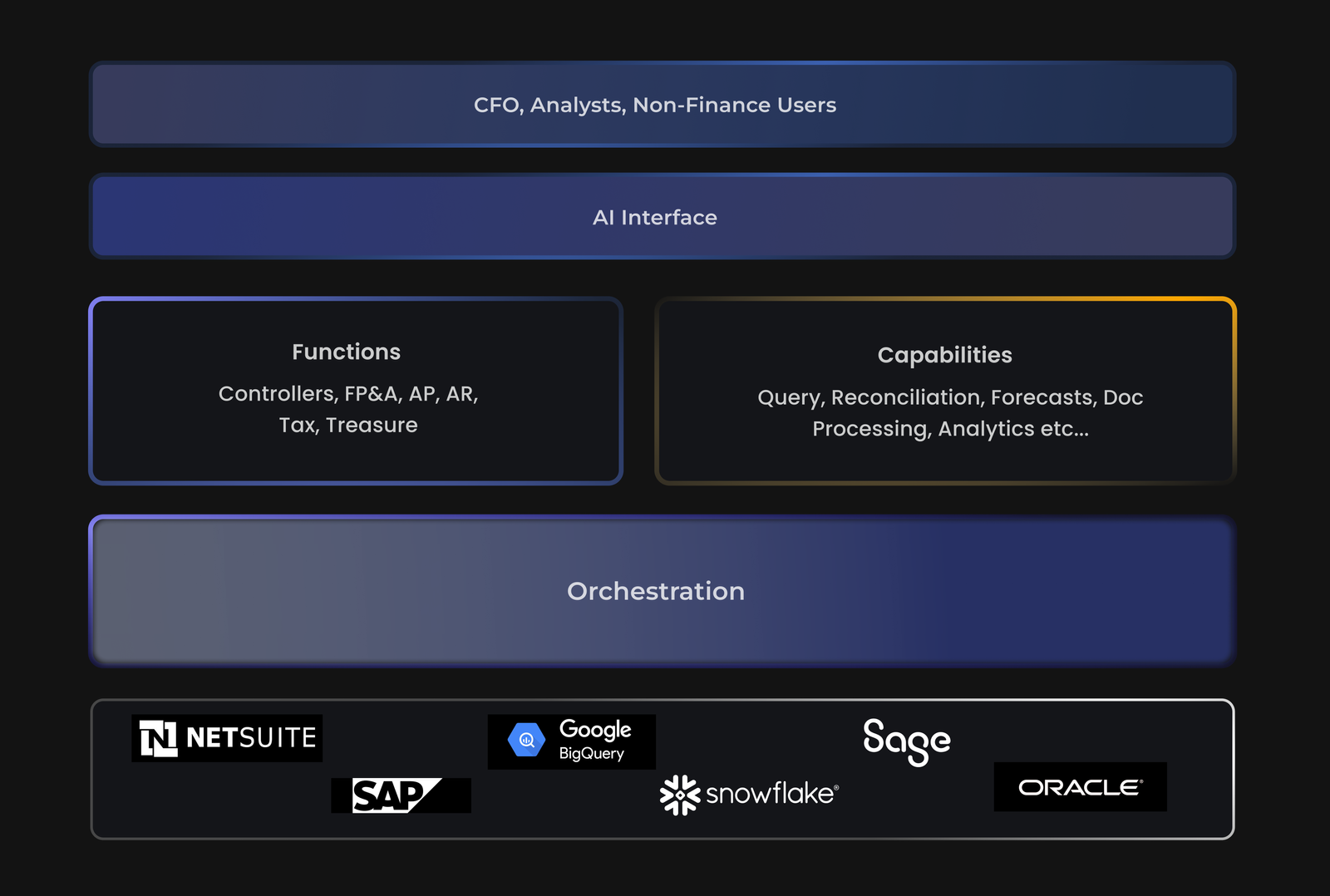
Effective access is the only test that counts
A user with three roles has the union of their permissions, plus anything granted directly, minus anything a workflow actually blocks. That is what they can do.
Testing at the role level misses this entirely, which is why access reviews that look at roles pass while the underlying exposure persists.
Prioritising in a team that cannot separate everything
In a small finance team perfect separation is not achievable. Pretending otherwise produces a report everyone ignores.
The workable approach ranks conflicts by what could actually happen: the value at risk, whether a compensating control exists, and whether the access has been used.
Usage evidence is what makes this practical. A theoretical conflict where the permission has never been exercised is a different risk from one where it is used weekly, and treating them the same wastes attention.

Access is a union, not a design
Role definitions live in the ERP, direct grants live alongside them, and the identity provider holds another layer. What a person can actually do is the combination of all three, and no single screen shows it.
What the agent needs to see
Ledger detail from the ERP, plus role and permission exports taken from the source they arrive in, read through the API surface your ERP already exposes rather than the database.
What it should be allowed to do
Prepare a conflict report and a remediation list and leave it for the internal control lead to approve. Reading widely and writing narrowly is the line that keeps this safe.
That division matters more than which model sits underneath. An agent that can read role and permission exports, user access lists and the conflict matrix while posting only through the validated path a person uses gives you the coverage without handing over the ledger, and ChatFin works that way on every ERP it connects to.
What continuous monitoring looks like
The agent reads role definitions, user assignments and direct grants, computes effective access per person, and tests it against your conflict matrix.
It then compares that against actual activity, so the report shows both what a person could do and what they have done.
Compute effective access
Combine roles, direct grants and workflow constraints into what each user can actually perform.
Test against the matrix
Apply your conflict definitions and identify every combination that breaches one.
Overlay usage
Check whether the conflicting permissions have been exercised, and by whom, in the period.
Track mitigation
Record the compensating control or accepted risk per conflict, with review dates.

Evidence auditors will accept
A conflict report dated two weeks before fieldwork demonstrates a report, not a control. What auditors look for is evidence that monitoring operated through the period and that findings were actioned.
Running the test on a regular cycle produces that record as a by product, including the changes that were made in response.
Testing and evidence
Effective access computed on a cycle, conflicts ranked with usage overlay, and a retained record of each run.
Risk acceptance
Deciding which conflicts are tolerable, what mitigates them, and who signs off on that judgment.
Reporting, never revoking
Removing access can stop a close or block a payment run, so it is never something to automate. ChatFin computes, ranks and evidences conflicts, and the decision to change a permission or accept a risk stays with the people accountable for it.
The record kept against access conflicts is deliberately plain: the role and permission exports the agent read, the reasoning it applied, the draft it produced, what the internal control lead changed, and the moment it posted. That is the trail an auditor asks for, and it is assembled while the work happens rather than reconstructed afterwards.
The wider argument for that design sits in what human in the loop really means and how to test a finance agent before you trust it.
A is prepared, reviewed and approved before it posts, and every step is logged from the source document to the entry. conflict report and a remediation list
How ChatFin monitors access
Effective access is computed per person from roles, direct grants and workflow constraints, then tested against your conflict matrix and overlaid with actual usage. Running it on a cycle produces the period evidence auditors ask for as a by product.
It connects to the ERP, the identity provider and approval workflow configuration through the interfaces those systems already expose, which keeps the security review short and the setup measured in days rather than quarters.
Compute effective access
Roles, direct grants and workflow constraints combined into what each user can genuinely perform.
Test against the matrix
Every combination that breaches a conflict definition identified with the users named.
Overlay actual usage
Whether the conflicting permission has been exercised, and by whom, in the period.
Record mitigation
Compensating control or accepted risk logged per conflict with a review date.
A first run is usually read only against a period you have already closed, so you can compare what the agent found against what your team found before anything is trusted with a conflict report and a remediation list.
Adding the workflow after this one costs no second integration, because NetSuite, SAP Business One, Acumatica and the other supported systems are already connected on the same terms.
Reviewing role design tells you the intent. Only effective access tells you the exposure.
ChatFin
Frequently Asked Questions
We are not a public company. Does this still matter?
The audit driver is smaller, but the fraud and error exposure is identical and often larger, because smaller teams concentrate more capability in fewer people. The value is in knowing where that concentration sits and what mitigates it.
Will it produce hundreds of conflicts we cannot fix?
Only if it reports theoretical conflicts without context. Ranking by value at risk and overlaying actual usage typically turns a long list into a short set that genuinely deserves attention.
Does it change access by itself?
No. It reports, ranks and evidences. Changing permissions is an administrative action that stays with the people accountable for it, and the agent records what changed and when.
Test effective access, not the access design document.
ChatFin computes effective access from roles, direct grants and workflow rules, tests it against your conflict matrix, and overlays actual usage.
The evidence accumulates through the period, which is what an auditor is looking for rather than a report produced on demand.
Book a DemoSee effective access mapped for your finance team.
Bring a role and user export from your ERP. We will show computed effective access, the conflicts ranked by exposure, and where usage confirms the risk is live.