
Agentic Payments Are Coming: When Your AI Agent Pays the Invoice
The card networks have shipped protocols that let AI agents make payments with programmable limits. When an agent can pay the invoice, the finance controls around it become the whole game.
- The major card networks have launched agentic payment protocols, with tokenized credentials, agent identity, real-time authorization, and programmable spend controls, that let AI agents make payments on a user's behalf.
- Authorization is designed to be scoped and revocable: spend caps, merchant restrictions, and expiration windows set when the agent is authorized, and cut off in real time.
- For finance, the arrival of agent-initiated payments makes the controls around them the central question: limits, approvals, audit trail, and reconciliation.
- When an agent can pay the invoice, whether it should, and under what governed limits, is exactly the finance discipline that matters.
Something that sounded like science fiction a year ago has shipped: the major card networks now offer protocols that let AI agents make payments. They combine tokenized credentials, agent identity, real-time authorization, and programmable spend controls, so an agent can transact on a user's behalf within limits the user set.
For consumer shopping, that is a convenience story. For finance, it is a controls story. The moment an agent can pay an invoice, the questions that matter are not technical but governance ones: what can it pay, up to what limit, with whose approval, and how is every payment traced? When the agent can pay, the controls around it become the whole game.
What the networks actually shipped
The protocols
The agentic payment protocols pair a few things: a way to identify and authenticate an AI agent, tokenized credentials so the agent transacts without handling raw card numbers, real-time authorization, and programmable spend controls. Crucially, the authorization is scoped and revocable, spend caps, merchant restrictions, and expiration windows are set when the agent is granted authority, and can be pulled in real time.
That design is telling. The networks did not just enable agents to pay; they built the controls, limits, identity, revocability, into the payment itself, because a payment an agent can make without limits is a liability, not a feature.
Why this shifts the finance question
For finance, agent-initiated payments move the important question from can it to should it, and under what limits. The technology can let an agent pay an invoice; whether it should pay this invoice, up to this amount, without a human approval, is a policy and controls decision that finance owns.
This is the same discipline finance already applies to any payment authority, delegation limits, approval thresholds, segregation of duties, applied to a new kind of actor. The agent does not remove the need for those controls; it makes them more important, because the agent acts fast and at scale.
Agent-initiated payments move the finance question from whether an agent can pay to whether it should, and under what governed limits, which is a controls decision finance owns.
The controls that become essential
When an agent can pay, four controls become non-negotiable, and they map onto what the networks built.
The technology can let an agent pay an invoice. Whether it should pay this invoice, up to this amount, without a human approval, is a controls decision finance owns.
Ashok ManthenaLimits are the new approval
When an agent can pay, the control moves from approving each invoice to defining what it may pay without asking.
The AgentCFO podcast noted that finance teams often want the software itself to hold the line, when the boundary has to be set by the people running the process.
Write the agent's payment limits the way you write a delegation of authority, with named exceptions and a review date.
Where a governed reasoning layer fits
Finance-side controls
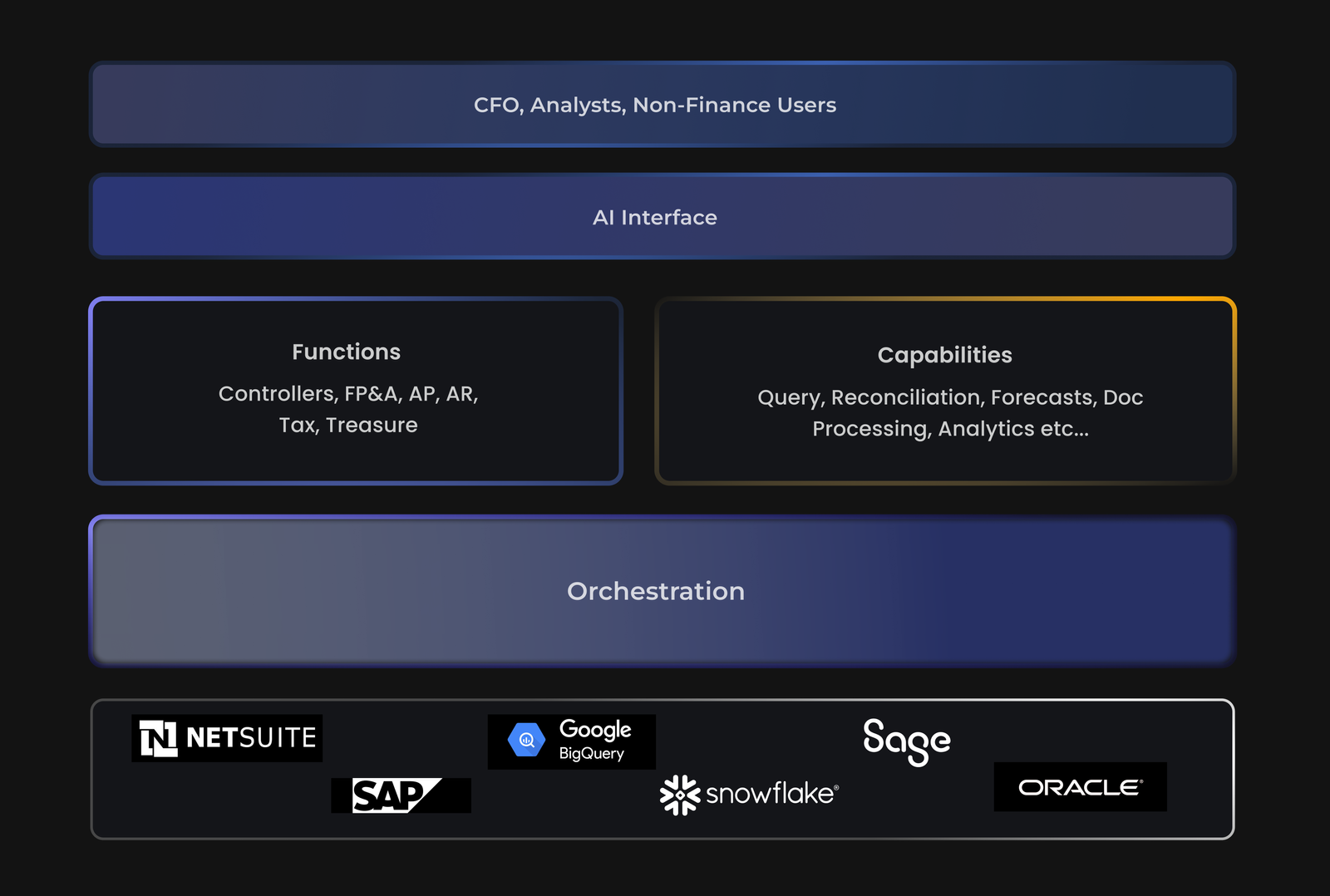
A governed reasoning layer is built around exactly this control model. It can prepare and reason about payments, run the three-way match, verify the vendor and the amount, check the payment against policy, but it holds the actual payment for approval where policy requires and keeps the full trail either way.
That is the finance-side complement to the networks' agentic rails: the rails make agent payments technically possible and controllable; a governed reasoning layer applies the finance policy, the approvals, and the audit trail that decide whether and how a given payment should happen.
The takeaway for finance leaders
Agentic payments are not a distant prospect; the rails exist. That makes now the time to decide your policy, not after an agent has paid something it should not have. The networks built revocable, limited authorization for a reason, and finance should use it.
Set the limits, define what needs human approval, insist on the audit trail, and treat agent payment authority the way you treat any delegated authority: carefully, and with controls. When the agent can pay the invoice, your controls are what keep that power safe.
When the agent can pay, controls are the whole game.
The card networks shipped agentic payment protocols with programmable, revocable limits. For finance, the arrival of agent-initiated payments makes the controls around them, limits, approvals, audit trail, the central question.
A governed reasoning layer applies the finance policy: it reasons about payments and holds them for approval where policy requires, keeping the trail either way.
See agent payments held to finance policy.
Bring your payment controls. We will show a reasoning layer reasoning about payments, checking them against policy, and holding the ones that need a human before they pay.