
Agentic AP Automation: Touchless Invoice Processing and Autonomous Payments
52.8% of best-in-class AP teams achieved touchless invoice processing in 2025. Agentic AI automates invoice capture, validation, tax data extraction, and duplicate detection. Processing cost per document drops 72% (from $8.81 to $2.43) with fraud prevention built-in.
- Touchless Processing 52.8% of best-in-class teams reached touchless AP in 2025, up from 47.2% the year prior. Agentic AI is accelerating this trend in 2026.
- Cost Reduction Invoice processing cost drops from $8.81 per document (manual) to $2.43 with automation—a 72% reduction. Major financial impact at scale.
- Autonomous Workflow Agentic AI ingest invoices from emails, portals, and EDI. Agents interpret diverse layouts, validate data, detect duplicates and fraud, and push clean data downstream automatically.
- Fraud Prevention AI flags duplicate invoices, unusual amounts, vendor inconsistencies. Fraud prevention is built into the automation, not added as an afterthought.
- Human Focus Shift AP team shifts from data entry and validation to vendor management, payment optimization, and strategic supplier relationships.
Accounts payable has been the easiest finance function to automate because it is so repetitive. An invoice arrives. Someone checks it against the PO. Someone codes it. Someone matches it to goods received. Someone approves it. Someone initiates payment. Each step is manual work that produces the same result thousands of times per year. Agentic AI changes this from high-touch manual process to autonomous workflow.
From Invoice Capture to Autonomous Payment: The Agentic Model
Agentic AP automation is proactive, goal-driven AI operating within defined guardrails. Agents ingest invoices from emails, supplier portals, and EDI feeds. Agents interpret diverse invoice layouts using multimodal models. Agents validate tax data, vendor information, and PO matching. Agents detect duplicates and fraud. Clean data flows downstream automatically. Human involvement is only for exceptions. This is not rule-based automation. This is autonomous workflow.
The operational shift is significant. In traditional AP, exceptions are handled when they emerge—a missing PO, a vendor mismatch, a duplicate invoice. In agentic AP, exceptions are proactively detected and flagged for human decision-making before payment is initiated. Quality improves. Payment cycles compress. Fraud risk decreases.
The team is there for the vendors, not the keying
AP exists to keep suppliers paid on the right terms. Data entry is overhead attached to that job, not the job itself.
The business to help them succeed and not to just focus on compliance rules or not just to focus on the nitpicky details about finance.
Jason Yocum, on the AgentCFO podcast
Once capture runs clean, move the team onto payment timing and vendor terms, where their decisions affect cash.
The Economics: 72% Cost Reduction Per Invoice
Manual invoice processing costs $8.81 per document. Agentic AP automation costs $2.43 per document—a 72% reduction. For an organization processing 100,000 invoices annually, this is the difference between $881,000 in processing costs and $243,000. That is $638,000 in annual savings. At scale, this is substantial.
Beyond cost, processing time improves. Invoices are processed in hours rather than days. Cash conversion cycle improves. Three-way matching (invoice, PO, receipt) that used to require manual review happens automatically. Payment can be initiated faster because validation is already complete.
2026 Trend: Building Trust Through Guardrails
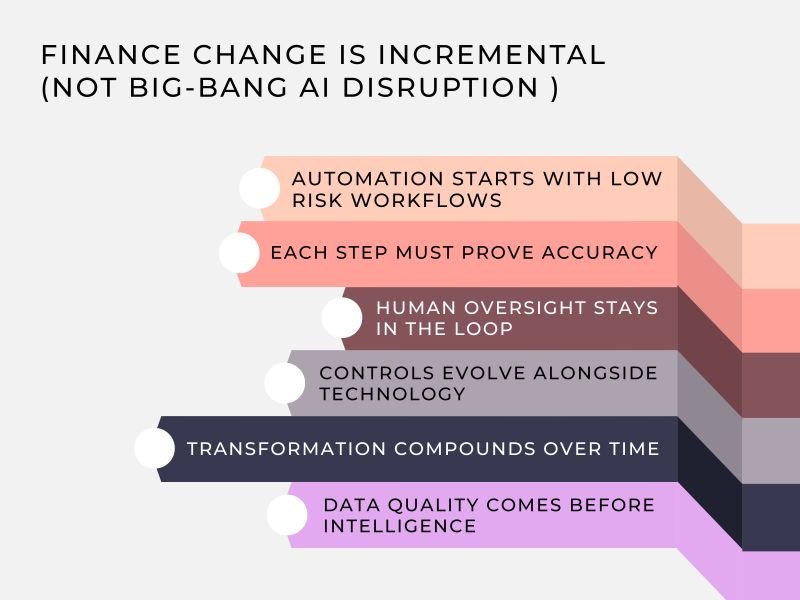
The most effective AP organizations do not try to automate 100% of invoices with agentic AI immediately. They start with high-value use cases where risk is low: standard invoices for established vendors, invoices below certain thresholds, invoices for repetitive line items. They prove the model works. They build organizational confidence. Only then do they expand autonomy to higher-risk scenarios.
This gradual expansion approach is driving 2026 adoption. Organizations are moving from "can we automate this?" to "how much can we safely automate?" Starting conservatively and expanding based on results and organizational comfort is the winning approach.
"We started with 40% of invoices eligible for full autonomous processing. Our agentic AI system nailed those cases. Now we are expanding to 65%. By end of 2026, we will likely be at 75-80%. The trust built through early success enables faster expansion." - AP Manager, Mid-Market Company
The Human Shift: From Processing to Management
When agentic AP automation handles 70-80% of invoices, AP staff shifts from processing to management. Vendor relationship management becomes a priority. Payment term optimization becomes strategic. Cash discount capture becomes a focus. AP team members are now business partners with procurement and accounting teams, not just invoice processors.
This is what organizations that have implemented RPA in AP discovered years ago—automation does not eliminate AP roles. It redefines them. Processing disappears. Strategic vendor management emerges.
AP Automation Is Now Agentic Autonomy
2026 is the year AP automation evolved from rule-based systems to agentic AI. The difference is significant. Agentic systems adapt. They handle edge cases. They improve over time. They enable true touchless processing for the majority of invoices.
Organizations deploying agentic AP automation in 2026 are building AP functions that are not just faster and cheaper, but fundamentally different in how they operate and create value.
The ChatFin Advantage: Agentic AP Agents
ChatFin AP agents ingest invoices from any source, validate data, detect duplicates and fraud, and match to POs and receipts autonomously. Exceptions are flagged for human review. Clean invoices flow to payment processing automatically. Your AP team manages vendors and strategy. Agents handle the work.
Learn more: AP Automation Transformation: From Invoice Processing to Vendor Management
Additional resource: Automating Three-Way Matching: Invoice, PO, and Receipt Reconciliation