
68% to 17%: Why AI-Driven Cash Forecasting Is Now a Competitive Advantage
New research from Visa and J.P. Morgan shows AI is transforming working capital management. Finance teams that deploy it are cutting cash flow uncertainty by 51 percentage points and recovering trapped capital faster than ever before.
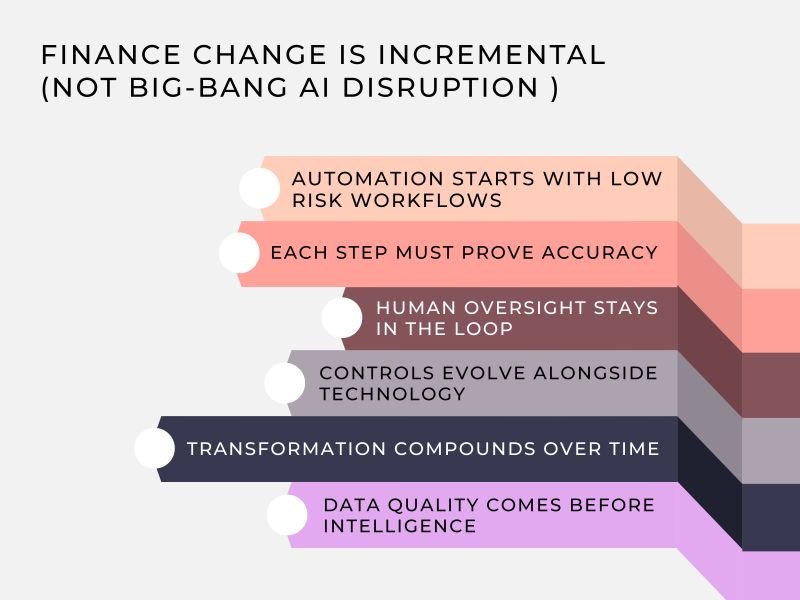
- Business Impact Organizations deploying these solutions are seeing measurable improvements in speed, accuracy, and cost efficiency.
- Data Foundation Success requires clean data and disciplined governance as the foundation for automation and AI.
- Change Management Technology is only half the equation. Process redesign and organizational alignment determine success.
- Competitive Advantage Finance teams that move now are building capabilities that competitors will spend years trying to replicate.
- Speed of Execution The organizations winning are not using better tools. They are executing faster and learning quicker.
Working capital has always been the unglamorous part of finance. But it is also where trapped capital sits, where small forecasting errors compound into cash crises, and where most organizations are leaving millions on the table. AI is changing how quickly that gets fixed.
68% to 17%: What That Range Shrinkage Actually Means
Visa's 2025 research on payment networks found that traditional working capital forecasts had a 68% variance range when predicting cash positions 30 days out. Organizations using AI-driven forecasting narrowed that to 17%. The difference is operational. A 68% range means you need to hold massive cash buffers just to cover uncertainty. A 17% range lets you optimize more aggressively.
J.P. Morgan's treasury advisory team found similar patterns: companies deploying AI in working capital were recovering 1-3% of annual revenue in previously trapped cash. For a company with $500 million in revenue, that is $5-15 million unlocked. The ROI calculation becomes obvious very quickly.
Fix the process the forecast depends on
A forecast inherits the state of the processes feeding it, so the return often comes from cleaning those up first.
My accounting process is a colossal mess. So I do an ROI on the process fix.
Vin Messina, on the AgentCFO podcast
Work out which upstream process causes the widest swing in your cash view, and fix that before tuning the model.
From Reactive to Predictive Cash Management
Traditional treasury teams react to cash positions. They watch bank balances and move money between accounts when needed. AI-driven treasuries predict cash positions days or weeks in advance, which changes everything about how you manage liquidity.
The Multi-Currency Problem AI Solves
Global companies manage cash in dozens of currencies. The interplay between FX rates, payment timing, and local regulations creates a forecasting problem that is nearly impossible to solve manually. AI is designed exactly for this kind of multi-variable optimization.
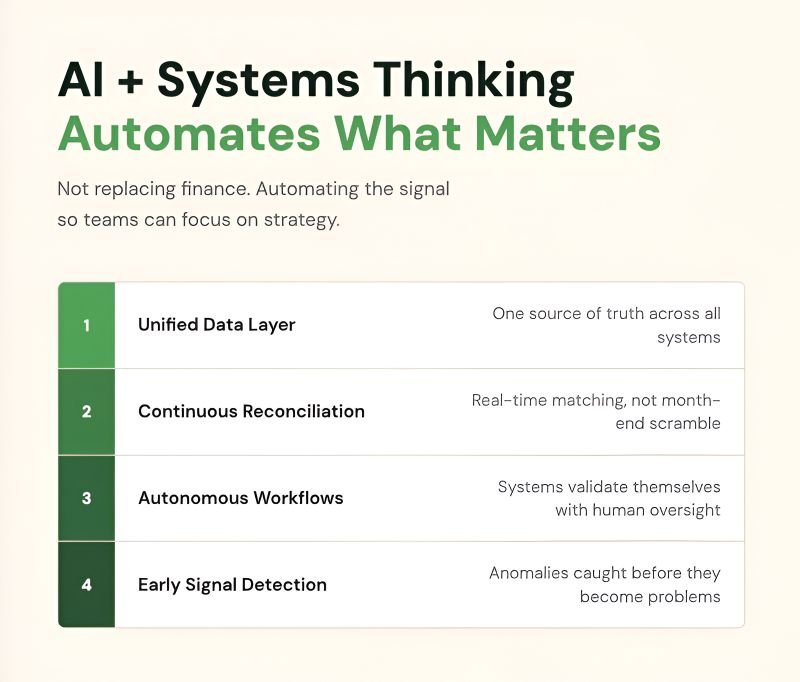
Treasury teams deploying AI for multi-currency optimization are reducing FX hedging costs, improving timing of cross-border payments, and reducing the administrative overhead of managing cash across entities. What used to take manual consolidation and daily emails is now run algorithmically with policy guardrails.
"When you can see 30 days of cash flow with 83% accuracy, you stop running your business around cash uncertainty." - J.P. Morgan Treasury Advisory, 2025
Where the Biggest Gains Hide
The obvious wins in AI-driven working capital are forecast accuracy and DSO reduction. But the deeper gains come from reframing how organizations think about cash. When predictability improves, you can restructure credit facilities, reduce backup lines, and invest in higher-yield instruments instead of holding excess cash.
Organizations that deploy this well are also using it to reshape supplier relationships. Predictable cash flow lets you offer supply chain financing programs that actually benefit both sides. You recover cash earlier. Suppliers get funded faster. Margins improve without anyone getting squeezed.
Working Capital Is Becoming a Competitive Advantage
Finance leaders have treated working capital management as a cost center. AI is turning it into a cash generation engine. When you can predict cash 30 days out with 83% accuracy, everything from hedging to borrowing to supplier terms becomes a strategic decision instead of a reactive scramble.
The companies that move here are not just improving their balance sheets. They are buying strategic flexibility that competitors will not have.
The ChatFin Advantage: Enterprise Finance Automation Platform
ChatFin is a finance AI super-agent platform that runs directly inside your ERP - NetSuite, SAP, Oracle, or Acumatica. Unlike disconnected point solutions that create more integration work, ChatFin connects AP, AR, reconciliation, forecasting, and compliance in a single autonomous system. With 100+ pre-built finance agents, ChatFin teams deploy agentic automation in weeks, not months. The platform learns your workflows, handles exceptions intelligently, and surfaces only true anomalies for human review.
Organizations deploying ChatFin report measurable results: 40-60% reduction in close cycle time, 80%+ automation rates on exception handling, and finance teams freed from tactical work to focus on strategic priorities. ChatFin does not replace finance judgment. It eliminates the mechanical work that masks it.
Learn more: Treasury AI: How CFOs Are Using AI Agents for Cash Flow Forecasting in 2026
Additional resource: 2026 Finance AI Deployment: CFO Investment Strategies and ROI Measurement