
What We Learned Connecting AI Agents to SAP Business One
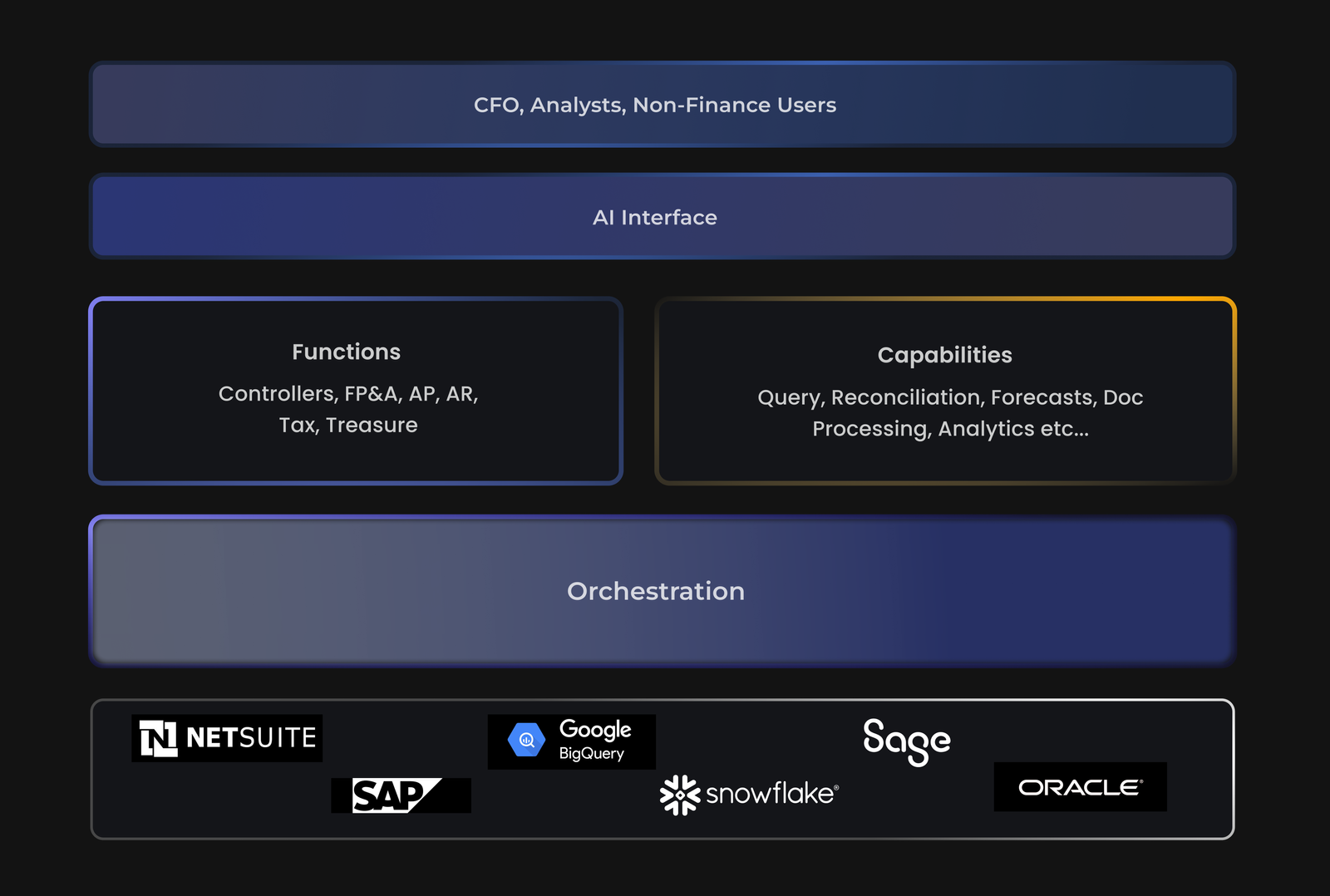
Connecting agents to a cloud-native ERP is one thing. SAP Business One is another, and the lessons are worth sharing. Here is what actually mattered when we wired agents into B1 finance: the data model, the service layer, scoping, and why memory beat model quality every time.
- SAP Business One rewards a purpose-built connection: its data model and service layer differ from cloud-native ERPs, and generic connectors struggle.
- Scope the data pull tightly. A reconciliation workflow needs specific accounts and feeds, not the whole database, which keeps the agent fast and auditable.
- The service layer and query patterns matter: reading efficiently from B1 without straining the system takes deliberate design.
- The memory layer mattered more than the model. Learning B1-specific vendor and coding patterns drove accuracy far more than a bigger model would.
- Keep the write path human. Reading is safe to automate broadly; posting back to B1 stays behind approval with full logging.
Most writing about AI and ERPs assumes a clean, API-first cloud system. SAP Business One is not always that, and connecting agents to it taught us things worth writing down, both for teams running B1 and for anyone who thinks ERP integration is a solved, uniform problem. It is solved, but not uniform, and B1 is a good illustration of why.
None of these lessons is exotic. They are the practical realities of making agents work reliably against a widely deployed small and mid-market ERP, and they generalize to any system that is not born API-first.
Lesson 1: a purpose-built connection beats a generic one
SAP Business One has its own data model and its own integration paths, and a generic connector built for cloud-native ERPs tends to struggle with them. The productive approach was a purpose-built connection that understands B1's structures rather than forcing them into a shape borrowed from another system. This is the single biggest reason B1 integrations succeed or stall: respecting the platform's actual model instead of assuming it looks like NetSuite or Acumatica.

Lesson 2: scope the data pull deliberately
The temptation is to pull everything and figure it out later. The better path is to scope tightly to what a workflow actually needs. A reconciliation agent needs the relevant accounts and the bank feed, not the entire B1 database. Narrow pulls keep the agent fast, keep the integration maintainable, keep sensitive data out of scope unless a workflow genuinely needs it, and make the whole thing easier to audit. Scoping is not just a performance choice; it is a data-protection and auditability choice.
Lesson 3: read efficiently through the service layer
Reading from B1 at the volume finance automation needs, without straining the system, takes deliberate design of the query and service-layer patterns. Naive, chatty access does not scale. The lesson was to design the read path for efficiency from the start, batching and shaping requests to what B1 handles well, so the agent runs continuously in the background without becoming a load problem for the ERP that the rest of the business depends on.
Lesson 4: memory beat model quality
This was the most striking lesson, and it holds well beyond B1. What drove accuracy was not a bigger or cleverer model; it was the memory layer learning B1-specific patterns, the recurring vendors whose names never matched cleanly, the intercompany quirks, the way a particular team coded ambiguous items. A modest model with that context outperformed a stronger model without it, every time. On B1 as everywhere, the differentiator is memory of how your business behaves, not raw model horsepower.
"The lesson that generalizes: on SAP Business One, the memory of how your ledger actually behaves mattered more than the model. Context beats horsepower."
Lesson 5: keep the write path human
Reading from B1 is safe to automate broadly. Writing to it is where discipline matters. Every posting back to B1 stayed behind human approval, with every action logged immutably. That single boundary, automate the reading, gate the writing, is what made the automation both safe and auditable, and it is the same boundary that makes ERP integration low risk on any system of record, not just B1.
Frequently asked questions
Is SAP Business One too old to automate well?
No. It requires a purpose-built connection rather than a generic one, but once that is in place, agents run the same reconciliation, AP, and close workflows they do on cloud-native ERPs. The age or architecture of the ERP is a connection engineering question, not a barrier to the automation itself.
What is the biggest mistake teams make connecting AI to B1?
Two: using a generic connector that does not respect B1's data model, and pulling too much data instead of scoping to the workflow. Both cause brittle, slow, hard-to-audit integrations. A purpose-built connection and a tightly scoped data pull avoid most of the pain.
Does this apply to other older or customized ERPs?
Largely yes. The lessons, respect the data model, scope the pull, design the read path, rely on the memory layer, and gate the write path, generalize to any ERP that is not born API-first, including heavily customized systems. B1 is just a clear, common example of the pattern.
B1 Is Automatable. It Just Needs the Right Connection.
ChatFin connects to SAP Business One with a purpose-built integration, scoped data access, an efficient read path, a memory layer that learns your B1 patterns, and human approval on every posting.
The lessons generalize: on any ERP, memory of your ledger beats model horsepower, and gating the write path keeps it safe.